

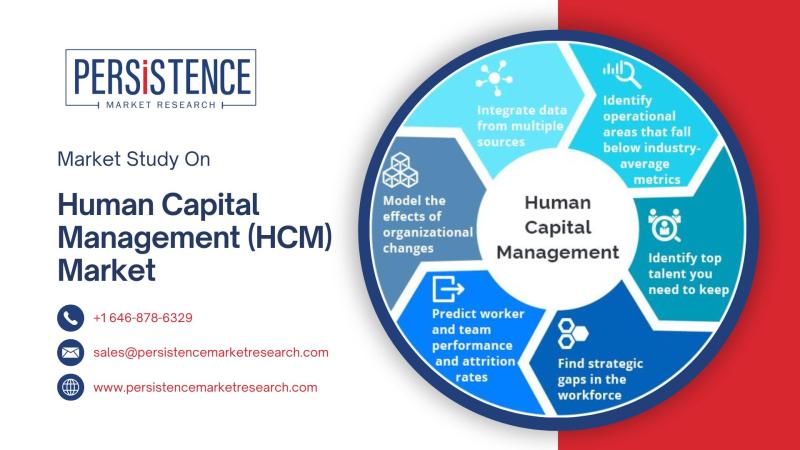
The global Human Capital Management (HCM) market is poised for a significant transformation, with projections indicating it will reach a staggering USD 43.1 billion by 2032. This marks a substantial increase from USD 23.8 billion in 2024, fueled by a robust Compound Annual Growth Rate (CAGR) of 7.7%. The market’s growth is driven by an increased focus on workforce optimization, employee engagement, and integrating digital technologies into HR functions. Organizations across various sectors are recognizing the necessity of HCM solutions for strategic decision-making, talent management, and workforce analytics.
One of the key drivers of this growth is the rising demand for cloud-based HCM solutions. Companies are transitioning towards automation in HR processes and emphasizing data-driven human resource planning. Core HR solutions hold the largest market share, primarily due to the essential nature of payroll, time tracking, and benefits administration. North America leads the market, attributed to early technology adoption, the presence of key players, and a strong demand for automated workforce management tools.
The Human Capital Management market is segmented based on component, deployment mode, organization size, and industry vertical. Software and services are the primary components, with software holding a major share. Core HR, talent management, workforce planning, and payroll are key modules within this segment, with core HR software dominating due to its importance in streamlining basic HR operations.
Cloud-based solutions are the preferred deployment mode, offering lower upfront costs, scalability, and ease of integration with third-party applications. Large enterprises are the primary adopters, but small and medium-sized enterprises (SMEs) are rapidly embracing HCM platforms for cost-effective workforce management. Key industries leveraging HCM include BFSI, healthcare, IT & telecom, and retail, all aiming for enhanced employee productivity and compliance management.
Regionally, North America dominates the HCM market, thanks to its advanced IT infrastructure, high cloud adoption rates, and a mature HR tech ecosystem. Major U.S. enterprises are investing in advanced analytics and AI-driven tools to streamline workforce operations. Meanwhile, Asia-Pacific is emerging as the fastest-growing region, propelled by digital transformation in developing economies like India and China. Rising employment rates, increased tech awareness, and government digitization initiatives are boosting the adoption of modern HCM systems in the region.
Driving the HCM market is the growing adoption of cloud-based HR solutions. These tools offer real-time data access, advanced analytics, and centralized HR processes, making them appealing for organizations seeking operational efficiency. Additionally, the need for workforce agility post-COVID-19 has made HCM platforms essential for managing remote work and digital onboarding.
Despite its growth, the HCM market faces challenges such as data privacy concerns and high implementation costs. Small and mid-sized enterprises often struggle to allocate budgets for full-scale HCM solutions. Furthermore, integrating HCM systems with legacy platforms can hinder adoption and delay implementation timelines.
Opportunities abound in the integration of artificial intelligence and machine learning into HCM systems. AI enables predictive analytics in talent acquisition, employee retention, and performance management. Moreover, the rise of the gig economy and hybrid work models opens new avenues for flexible and modular HCM solutions tailored to modern workforce dynamics.
The Human Capital Management market remains highly competitive, featuring prominent players that continuously innovate to gain market share. Leading companies include SAP SE, Oracle Corporation, Workday, Inc., ADP, Inc., Ultimate Kronos Group (UKG), Ceridian HCM Holding Inc., Cornerstone OnDemand, Inc., IBM Corporation, Infor, Inc., and BambooHR LLC. Notably, in March 2024, Workday launched new AI-powered features aimed at improving predictive workforce planning, while Oracle expanded its HCM Cloud capabilities by integrating Generative AI for talent management and recruitment in early 2025.
As the HCM market evolves, businesses increasingly rely on digital tools for workforce optimization, setting the stage for sustainable growth. Cloud adoption, AI integration, and evolving work models are redefining how organizations manage human resources, making HCM platforms indispensable for future-ready enterprises. Investing in strategic HCM solutions today provides a competitive edge in tomorrow’s talent-driven economy.
Note: This article is inspired by content from https://www.openpr.com/news/4022506/human-capital-management-hcm-market-expected-to-hit-usd-43-1. It has been rephrased for originality. Images are credited to the original source.