

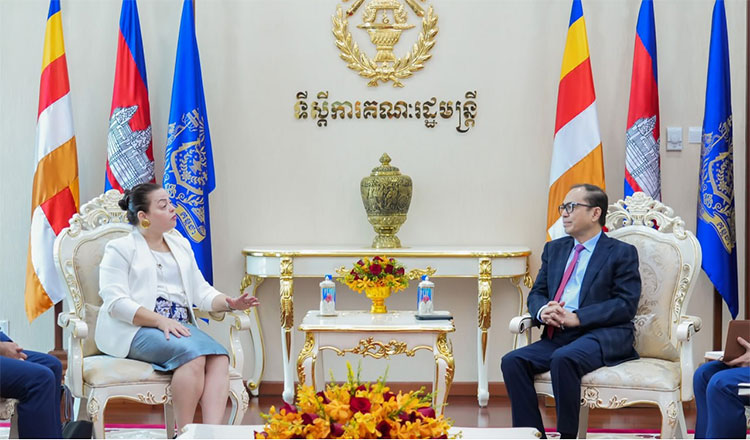
Vissoth Calls for Stronger Human Capital Development
In a recent high-level meeting with the United Nations Development Programme (UNDP), Secretary of State at the Ministry of Economy and Finance, Vissoth, emphasized the urgent need for capacity building and human resource development in Cambodia. He underscored these priorities as foundational pillars for the country’s sustainable growth and integration into the global economy.
Strategic Dialogue with UNDP
During the meeting, Vissoth highlighted the significance of the longstanding partnership between Cambodia and the UNDP. He acknowledged the support the organization has provided in various areas, including governance, poverty reduction, and environmental sustainability. The focus, he noted, must now shift more intensively towards enhancing the skills and capabilities of the Cambodian workforce to meet modern challenges.
“If we want to compete in the international arena, we must invest in people,” Vissoth said. “Our human capital is our most valuable asset, and it is essential that we build a knowledge-based society where innovation and skills drive development.”
Aligning with National Development Goals
The Secretary of State also pointed out that these objectives are in line with Cambodia’s Rectangular Strategy Phase IV and the National Strategic Development Plan. Both frameworks identify education, training, and institutional capacity development as key factors for sustainable economic growth and social equity.
He further explained that strengthening human resources would not only boost Cambodia’s competitiveness but also create a resilient society capable of adapting to future uncertainties. “This is not just about economic growth,” Vissoth stressed. “It’s about ensuring that every Cambodian has the opportunity to thrive.”
UNDP’s Role and Commitment
Representatives from the UNDP expressed their continued commitment to supporting Cambodia’s development agenda. They acknowledged the importance of investing in human capital and agreed that collaborative efforts in education reform, capacity enhancement, and institutional training are crucial to achieving the country’s long-term goals.
“We are pleased to see Cambodia’s leadership prioritizing these critical areas,” said a UNDP spokesperson. “Human development lies at the core of our mission, and we are ready to provide technical and financial assistance to support Cambodia’s aspirations.”
Challenges Ahead
Despite the encouraging dialogue, both parties acknowledged several challenges that Cambodia faces. These include limited access to quality education in rural areas, underdeveloped vocational training programs, and a mismatch between labor market needs and the skills of the workforce.
Vissoth called for a multi-stakeholder approach to address these issues, involving not only the government and international partners but also the private sector and civil society. He suggested that public-private partnerships could be instrumental in creating training opportunities and promoting innovation among young Cambodians.
A Vision for the Future
The meeting concluded with a shared vision for a more inclusive and empowered Cambodia. Both the Ministry of Economy and Finance and the UNDP reiterated their commitment to working collaboratively on projects that strengthen institutional frameworks, enhance educational systems, and promote lifelong learning.
As Cambodia continues its journey toward becoming an upper-middle-income country by 2030, the government recognizes that investment in human capital is not optional but essential. “No country can progress sustainably without equipping its people with the skills they need,” Vissoth remarked. “Our future depends on how well we prepare our citizens today.”
With ongoing support from international partners like the UNDP and a clear strategic direction, Cambodia hopes to overcome its challenges and build a society where every individual has the tools and opportunities to succeed.
This article is inspired by content from Khmer Times. It has been rephrased for originality. Images are credited to the original source.