

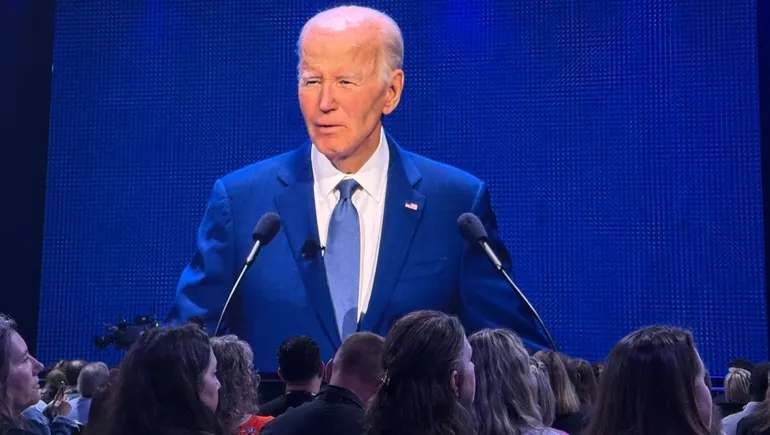
Biden Addresses SHRM 2025 Conference in San Diego
At the closing session of SHRM 2025 in San Diego, former President Joe Biden delivered a heartfelt speech to a room full of human resources professionals. His central message was clear: real leadership stems from personal connection. Biden emphasized that effective leaders must invest time in understanding and valuing their team members as individuals.
“The strength of any team relies on the individual people who form it—whether they feel seen, valued, and supported,” Biden told the audience. He compared the role of a national leader to that of a “chief people officer,” highlighting the human element at the core of leadership.
Empathy and Connection Over Business Formalities
Biden challenged the common workplace mindset that separates personal life from professional responsibilities. “Too often we draw a line between people’s personal and professional lives,” he said. “We say, ‘It’s just business,’ but true leadership is deeply personal. It’s about connection and empathy.”
He encouraged HR professionals to remember the small, meaningful details—like employee birthdays—as a way to show genuine care. These seemingly minor gestures, he argued, can profoundly impact morale and loyalty among staff.
Personal Anecdotes Highlight Leadership Philosophy
Biden shared personal stories to illustrate his leadership philosophy. One such moment occurred during his time in the Senate. On the day of a critical vote, he chose to take the train back home to Delaware to attend his daughter’s eighth birthday. He watched her blow out candles on the platform before boarding a train back to Washington, D.C.
“We convince ourselves that meetings, reports, and deadlines can’t wait,” he said. “And we tell ourselves our families will understand. But deep down, we know we’re sacrificing moments that matter. Moments we can’t get back.”
These actions, he said, sent a powerful message to his team—that they were encouraged to prioritize their families, too. It wasn’t just about work-life balance; it was about affirming that people are more than just their job titles.
Setting an Example as Vice President
When Biden became Vice President, he formalized this belief in a memo to his staff. The note clearly stated that no one should miss important family events for work. “Birthdays, anniversaries, weddings, religious observances, graduations, and times of personal need like illness or loss—these are sacred,” he wrote. “If I find out you are working while missing something important with your family, it will disappoint me greatly.”
By institutionalizing this approach, Biden hoped to lead by example. He believed that when employees know their leaders genuinely care about them and their families, they are more likely to be dedicated and give their best at work.
HR’s Role in Shaping Workplace Culture
Biden’s remarks resonated deeply with HR professionals, many of whom are tasked with shaping workplace culture and policies. He reminded them of their unique position to influence how organizations treat people and how empathy can be integrated into corporate culture.
“You are the ones who define how people are treated in the workplace,” he said. “You have the power to make work more human, more compassionate. Leadership starts with you.”
He urged them to not only support policies that promote work-life balance but to embody those values themselves. “People don’t remember what you said in a meeting,” he added. “They remember how you made them feel.”
Making Time for What Matters
Biden’s speech served as a poignant reminder that leadership is not about titles or authority, but about making others feel valued. His message was simple but profound: show up for the people around you, not only in professional settings but in their personal lives as well.
“Leadership isn’t about being in charge,” he concluded. “It’s about taking care of those in your charge.”
His words left an enduring impression on the attendees, reinforcing the idea that human connection is not a distraction from leadership—it is the very essence of it.
This article is inspired by content from Original Source. It has been rephrased for originality. Images are credited to the original source.