

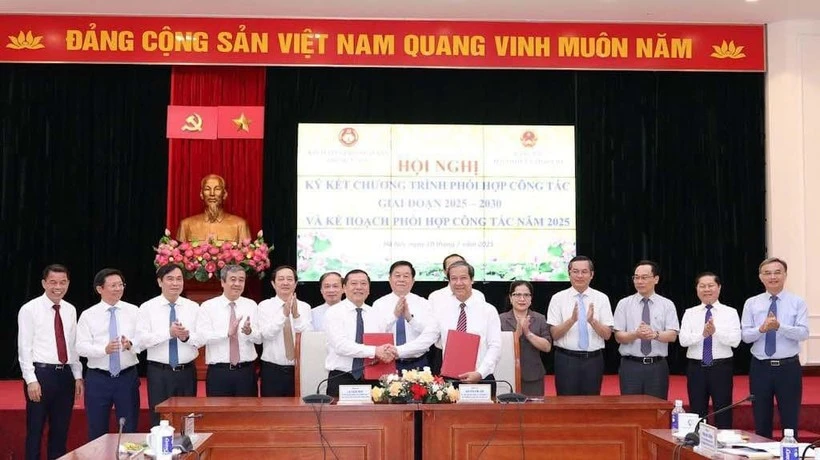
Strategic Cooperation to Foster Educational and Human Capital Growth
On July 10 in Hanoi, a landmark conference brought together key bodies of the Communist Party of Vietnam to solidify a joint strategy for enhancing the nation’s education system through human resource development. The event marked the signing of a critical cooperation programme for the 2025–2030 period, underscoring the country’s commitment to comprehensive and forward-thinking educational reform.
The conference was organized by the Party Central Committee’s Commission for Communication and Education, the Commission for Mass Mobilisation, and the Party Committee of the Ministry of Education and Training. The gathering emphasized the crucial role of coordinated efforts among Party organizations in shaping the future of Vietnam’s education landscape.
Comprehensive Education as a Pillar for National Development
Addressing the attendees, representatives highlighted that education is not only a fundamental human right but also a pivotal driver of national development. The newly signed cooperation framework is expected to streamline communication, mobilization, and policy implementation mechanisms aimed at elevating the quality of education across the country.
Human resource development emerged as the central pillar in this vision, with a focus on nurturing well-rounded individuals equipped with both knowledge and ethical values. This holistic approach is intended to build a workforce capable of meeting the challenges of the Fourth Industrial Revolution and contributing meaningfully to the country’s socio-economic progress.
Objectives of the 2025–2030 Cooperation Programme
The cooperation programme sets out clear objectives to guide the next five years, including:
- Enhancing the effectiveness of ideological and political education among students and educators.
- Strengthening the Party’s leadership in education and training institutions.
- Promoting innovation in educational methodologies and curricula.
- Fostering a culture of lifelong learning and continuous professional development.
- Accelerating digital transformation in education to improve accessibility and quality.
The programme also aims to address regional disparities in education and ensure that rural and underprivileged communities receive adequate support and resources.
Interdisciplinary Collaboration for Greater Impact
During the conference, officials emphasized the importance of interdisciplinary collaboration. The synergy between the Commission for Communication and Education, the Commission for Mass Mobilisation, and the Ministry of Education and Training is expected to create a unified front in tackling educational challenges and implementing reforms more effectively.
By aligning their strategies, these entities hope to enhance the reach and impact of their educational initiatives, particularly in promoting civic responsibility, ethical behavior, and cultural identity among Vietnamese youth.
Education Reform in the Context of National Goals
The conference also contextualized the education reform strategy within Vietnam’s broader national development goals. In line with the resolutions of the 13th National Party Congress, the country aims to become a high-income economy by 2045. To achieve this ambitious target, Vietnam must invest heavily in developing a skilled, innovative, and adaptable labor force.
Education and human resource development are seen as the cornerstones of this effort, requiring not just investment in infrastructure but also in pedagogy, teacher training, and curriculum design. The cooperation programme is structured to support these priorities, ensuring that Vietnam’s education system evolves to meet both domestic and global demands.
Prime Minister’s Emphasis on Accountability and Efficiency
While the focus was primarily on education, Prime Minister Pham Minh Chinh also used the platform to call for greater accountability and efficiency in implementing national infrastructure projects—including key railway developments—that align with the country’s modernization goals. His remarks served as a reminder that education reform and infrastructure development are interconnected facets of national progress.
Looking Ahead: A Vision for Inclusive and Quality Education
The cooperation programme signed at the conference is more than a bureaucratic agreement; it represents a unified commitment to nurturing Vietnam’s future generations. By prioritizing human resource development and fostering a culture of continuous learning, the country aims to build an inclusive, equitable, and high-quality education system that supports sustainable development.
As Vietnam continues its journey toward modernization and global integration, the lessons and outcomes of this strategic partnership will likely play a vital role in shaping the nation’s socio-economic trajectory in the coming decades.
This article is inspired by content from Original Source. It has been rephrased for originality. Images are credited to the original source.