

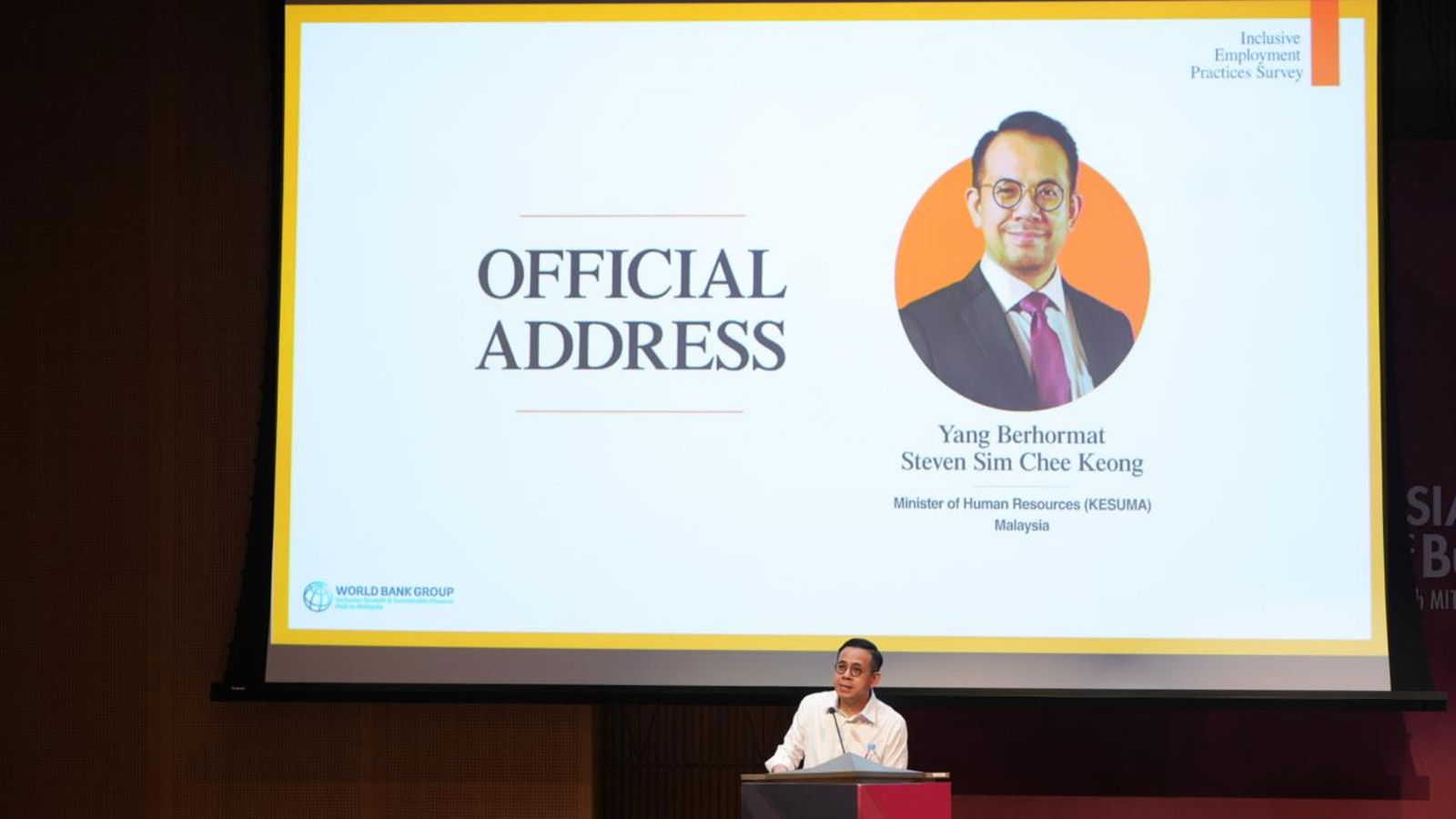
Majority of Malaysian Firms Recognize Women’s Value
According to the 2024 Inclusive Employment Practices Survey, 62% of Malaysian companies believe that hiring more women can enhance workforce productivity. This insight aligns with broader efforts by the government and private sector to foster a more inclusive and sustainable labor force.
The survey reveals that women aged 21-30 constitute 41% of the female workforce in Malaysia, consistent across sectors and company sizes. However, representation declines with age, highlighting challenges in retaining women as they grow older or start families.
Challenges in Retaining Women in the Workforce
Malaysia faces a significant hurdle in retaining women in the labor market. Female labor force participation (FLFP) peaks between ages 25-29 but declines thereafter as many women exit permanently due to family responsibilities. Unlike many countries, Malaysia sees fewer women returning after career breaks.
Household duties, especially childcare and eldercare, remain the main reasons women stay out of the workforce. The lack of flexible working arrangements and supportive environments exacerbates this problem. Career breaks often lead to wage penalties and limited upward mobility, while hiring discrimination persists due to perceived outdated skills or reduced commitment.
Gender Distribution Across Firm Sizes and Roles
Currently, women make up 47% of employees in surveyed firms, compared to 53% for men. Nationally, the male labor force participation rate is 83.4%, while female participation is just 56.6%.
Women are more prevalent in micro-SMEs (47%) compared to large firms (42%). Firms operating for 20-30 years report the lowest female representation, between 35-39%, while others have higher shares of 45-50%.
Across organizational levels, female representation hovers around 30% for high-level, mid-level, and entry-level roles. However, larger firms show a stark drop in female leadership, with only 28% in senior roles and 33% at mid-level positions.
Age Distribution and Career Longevity
Female workforce participation decreases with age: 21-30 (41%), 31-40 (32%), 41-50 (17%), and over 50 (10%). This pattern is uniform across industries and reflects a broader national trend of women leaving the workforce permanently after starting families.
Despite these trends, 53% of firms believe increased female participation improves talent acquisition. Yet, challenges remain. Over half of surveyed firms cite family obligations (58%) and maternity regulations (54%) as barriers. These concerns are especially prominent among micro-SMEs.
Costs and Perceived Workplace Disruption
Approximately 40% of firms highlight the cost of benefits and required facilities—like lactation rooms and childcare—as obstacles to hiring more women. This concern is particularly acute in the construction sector, where nearly 70% of firms flagged it as a major challenge. Only 35% believe hiring women would disrupt workplace dynamics.
Inclusive Measures and Planned Initiatives
Many firms are proactively implementing inclusive practices. Flexible work arrangements (FWAs) and childcare support are among the most cited upcoming initiatives. Nearly half of the companies plan to offer childcare subsidies, prenatal check-ups, and onsite childcare facilities.
Additionally, 45% aim to establish diversity committees dedicated to inclusivity. However, fewer than 40% plan to expand maternity and paternity leave policies.
Government Incentives and Support
An overwhelming 73% of companies support government subsidies for offering additional benefits to female employees. Meanwhile, 64% favor training programs to reintegrate women returning to work. Fewer firms support longer mandated paternity leave as a strategy to improve hiring equity.
Flexible Work and Government Guidelines
While some companies still prefer on-site operations for productivity reasons, many are embracing hybrid and flexible work models to boost employee well-being and motivation. The Malaysian government, through TalentCorp, introduced the Flexible Work Arrangement Guidelines (AKF), offering consultations, readiness assessments, and training to help companies adapt.
Tax incentives also support firms investing in software and capacity building for remote work solutions, further encouraging inclusive practices.
Support for Career Returnees
The government’s Career Comeback Programme (CCP) provides income tax exemptions for women re-entering the workforce. To date, 2,700 women have registered, and 351 firms have hired returnees through this initiative.
Budget 2025 includes additional incentives, such as a 50% income tax exemption for companies hiring women returnees and a matching 50% tax deduction for those offering paid care leave for dependents.
These efforts reflect a broader national strategy to ensure long-term, inclusive economic growth. As the Human Resources Ministry (KESUMA) stated on Facebook: “Increasing women’s participation is a strategic solution for sustainable and competitive economic growth.”
This article is inspired by content from Original Source. It has been rephrased for originality. Images are credited to the original source.