

From Private Sector to Global Development
Akiko Hasegawa’s professional journey exemplifies a successful transition from private business into global leadership. After accumulating significant experience in finance and operations within the private sector, Akiko joined the United Nations Development Programme (UNDP) in 2018 as a Junior Professional Officer (JPO). Over the years, she steadily progressed through various roles, including Programme Analyst at UNDP Headquarters, Head of Finance in the Afghanistan Country Office, and Operations Specialist at the UNDP Bangkok Regional Hub.
In early 2025, Akiko joined the World Bank as a Finance Officer in the Budget, Performance Review, and Strategic Planning (BPS) Vice Presidency. Her mission is clear: to enhance the efficiency of financial and operational management in ways that ultimately improve lives across the globe.
Embracing a Strategic Leadership Path
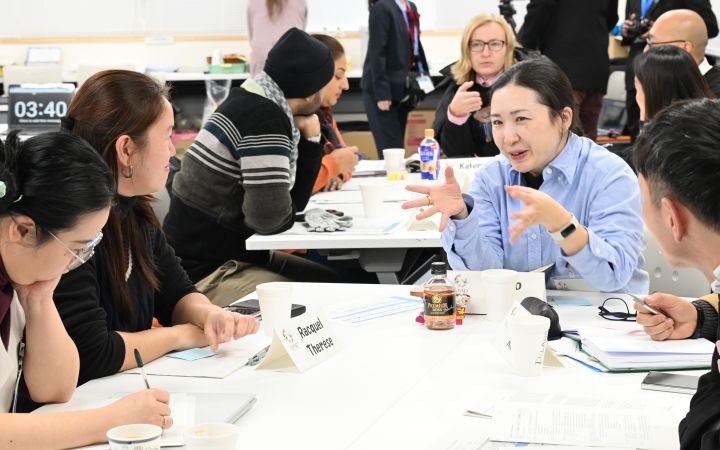
Seeking to elevate her career from a tactical to a strategic level, Akiko enrolled in the FY2024 Mid-Career Course of the Programme for Global Human Resource Development for Peacebuilding and Development. This program, sponsored by Japan’s Ministry of Foreign Affairs and implemented by Hiroshima University in collaboration with the United Nations Institute for Training and Research (UNITAR), was held in Hiroshima in January 2025.
“The one-week course was intense yet engaging, providing an opportunity to reflect on my career journey thus far,” Akiko shared. She emphasized that the program helped her envision a future where she leads with purpose and impact, equipped with the mindset and skills necessary for upper-level leadership.
Personal Growth and New Perspectives
One of the most transformative aspects of the course for Akiko was the opportunity to engage with a diverse cohort of professionals from around the world. This interaction introduced her to a variety of leadership styles and philosophies. “I learned that everyone has their own leadership style—there is no single ‘right’ approach,” she noted. Some participants were visionary leaders, while others led quietly by example. This variety helped Akiko recognize that her own leadership style could evolve through practice and reflection.
Additionally, the program encouraged her to confront her perfectionist tendencies and embrace a more adaptive leadership approach. This shift, she believes, will better prepare her to manage larger and more diverse teams in the future.
Building Skills for the Future
The course also emphasized acquiring new soft skills critical for leadership in global development. Akiko gained exposure to strategic foresight concepts highlighted in the UN 2.0 policy brief, which promotes innovation and forward-thinking within the United Nations system.
Public speaking was another area where Akiko sought improvement. She practiced articulating broader visions and addressing unfamiliar topics with confidence—skills essential for inspiring and guiding diverse teams. A mock interview exercise became a pivotal learning moment. “It required intensive preparation, but I received constructive feedback from experienced practitioners and coaches. It gave me confidence, and I hope to build on that going forward,” she said.
Balancing Career and Life
As her career advanced, Akiko also experienced changes in her personal life that led her to reevaluate her work style. “I’ve always dedicated myself fully to my work and truly enjoy what I do. However, I began to feel that a change in mindset and working style would be necessary—one that allows me to contribute meaningfully without compromising other important aspects of life,” she reflected.
She likens her career to a marathon rather than a sprint and believes that taking time to reflect through the Mid-Career Course was a crucial step in aligning her professional ambitions with her personal values and long-term goals.
Looking Ahead
While Akiko has not mapped out her exact career trajectory, she remains committed to impactful leadership in the fields of finance and operations. “I am committed to contributing to sustainable development via impactful financial strategy and effective business operations. I strive to be the person who makes our operations more efficient so we can deliver more to the beneficiaries,” she stated.
Her participation in the Mid-Career Course has become a cornerstone in her professional evolution. “This programme was truly worth the investment. Unless you invest, you won’t discover anything new. Every moment offered a new perspective and was a valuable opportunity,” Akiko concluded.
About the Programme and Institutions
Since 2007, Japan’s Ministry of Foreign Affairs has been implementing human resource development initiatives in peacebuilding. In 2015, it launched the Programme for Global Human Resource Development for Peacebuilding and Development to nurture professionals in these critical fields. Hiroshima University, founded in the aftermath of the atomic bombing, is now a global leader in peace and development education and was commissioned to implement the FY2024 program in collaboration with UNITAR.
This initiative aims to develop internationally-minded individuals who are committed to addressing global challenges and promoting sustainable peace. Under the guidance of Hiroshima University and UNITAR, professionals like Akiko Hasegawa are better equipped to take on leadership roles in international development and peacebuilding.
This article is inspired by content from Original Source. It has been rephrased for originality. Images are credited to the original source.