

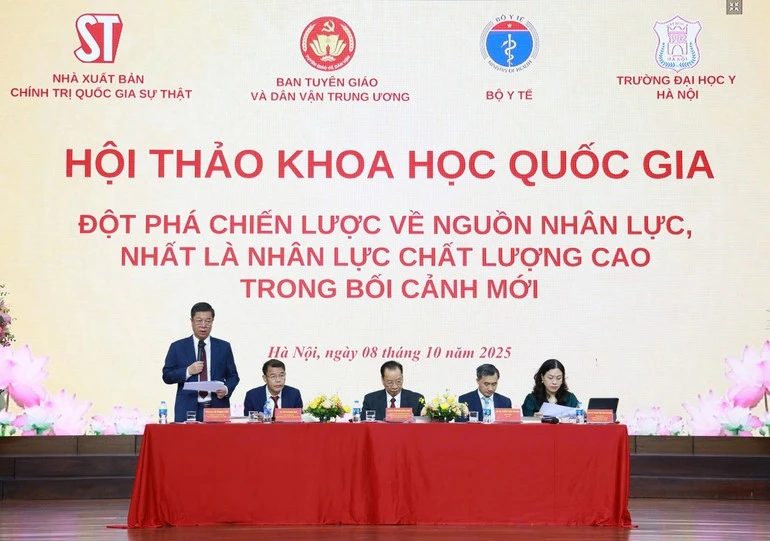
National Symposium Highlights Strategic Role of Human Resources
A national symposium titled “Strategic Breakthroughs in Human Resources” was convened in Hanoi on October 8, bringing together policymakers, scholars, and industry leaders to explore the critical role of skilled personnel in enhancing national competitiveness.
Organized amid a rapidly evolving global environment and accelerated technological advancements, the event emphasized the necessity of cultivating high-quality human resources as a strategic imperative for Vietnam’s sustainable development and global integration.
Human Capital: The Cornerstone of National Competitiveness
During the symposium, several speakers underscored how human capital forms the bedrock of a nation’s ability to compete on the global stage. In his opening remarks, Deputy Prime Minister Tran Hong Ha stressed that developing a high-quality workforce is not only vital for economic growth but also for ensuring social equity and national security.
Ha pointed out that Vietnam is at a pivotal stage in its development journey and must seize the opportunity to invest strategically in human resources. He called for synchronized efforts among government agencies, educational institutions, and private enterprises to create a robust and innovative labor force.
Adapting to Global and Technological Shifts
Experts at the symposium highlighted the accelerating pace of digital transformation and the emergence of new industries, which demand a workforce equipped with modern skills and adaptability. Professor Nguyen Dinh Duc from the Vietnam National University emphasized that upskilling and reskilling are essential to meet the changing demands of the labor market.
“Vietnam must build a knowledge-based economy where human creativity and innovation drive productivity,” said Duc. He also noted the importance of aligning educational programs with market needs and fostering collaboration between academia and industry.
Education Reform as a Strategic Imperative
One of the key themes at the symposium was the urgent need for comprehensive education reform. Participants agreed that Vietnam’s education system must undergo structural changes to better prepare students for future challenges.
Deputy Minister of Education and Training Hoang Minh Son highlighted ongoing efforts to modernize curricula, promote digital learning, and enhance the quality of vocational training. He stated that education should be the engine of innovation and economic development.
“We need to nurture not only technical skills but also soft skills such as critical thinking, communication, and teamwork,” Son added.
Public-Private Partnerships and Policy Innovation
Delegates also discussed the role of public-private partnerships in fostering human capital. Nguyen Van Hieu, CEO of a leading tech firm, shared how his company collaborates with universities to provide internships, mentorship, and job placement programs.
He emphasized that businesses must take an active role in shaping the future workforce by investing in training and development initiatives. In response, policymakers at the symposium pledged to create an enabling environment through regulatory support and fiscal incentives.
Several proposals were made to improve labor market policies, including the establishment of a national skills council and a centralized data system to monitor workforce trends and project future needs.
Inclusive and Sustainable Development Goals
Inclusivity was another major topic, with speakers stressing that human resource development should benefit all segments of society. Special attention was given to promoting gender equality, supporting ethnic minorities, and expanding access to education in rural areas.
“A truly competitive nation is one where every citizen has the opportunity to realize their potential,” said Dr. Le Thi Thu, a sociologist and advocate for inclusive education. She advocated for targeted programs that support disadvantaged groups and reduce inequality in access to quality learning and employment opportunities.
Looking Ahead: A Call to Action
The symposium concluded with a strong consensus that Vietnam must act decisively to harness the full potential of its human capital. Delegates called for a national strategy that integrates education, labor, and innovation policies to create a dynamic and resilient workforce.
Deputy Prime Minister Tran Hong Ha reiterated the government’s commitment to prioritizing human resource development as a cornerstone of Vietnam’s socio-economic strategy. “The future belongs to those who invest in people,” he said.
The event served as a platform for stakeholders to share insights, propose solutions, and forge partnerships aimed at transforming Vietnam into a competitive, knowledge-driven economy in the coming decades.
This article is inspired by content from Original Source. It has been rephrased for originality. Images are credited to the original source.