

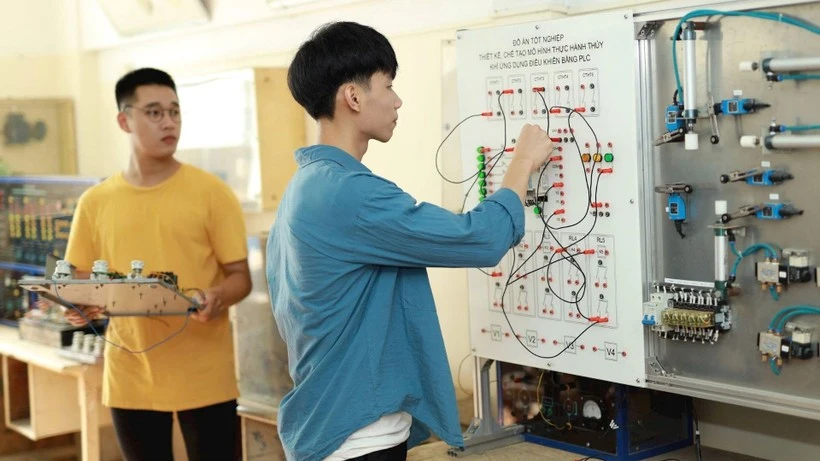
Party Emphasizes Human Resource Development Strategy
Vietnam’s top leadership is placing renewed focus on the development of high-quality human resources as a cornerstone of national progress. General Secretary of the Communist Party of Vietnam (CPV) Nguyen Phu Trong has called for a strategic shift in the Party’s approach to inspection and personnel development, stressing the importance of proactive prevention over reactive measures in managing human capital.
At a recent conference, Party chief Trong emphasized that the Party’s executive committees and organizations at all levels must take unified responsibility in advancing human resource development. He noted that the traditional focus on identifying and addressing violations should evolve towards fostering a culture of excellence and accountability from the outset.
Renewed Thinking on Human Development
According to the CPV’s General Secretary, one of the most critical components of national development is the quality of its people. The Party views human development not simply as a sectoral issue but as a comprehensive process that lies at the heart of its governance and leadership activities. This includes education, training, ethical standards, and professional expertise.
In his remarks, Trong underscored that human resource policies must be designed with a long-term vision, ensuring that the country can meet the demands of modernization and global integration. The Party is determined to cultivate a generation of professionals who are not only technically proficient but also politically committed and morally upright.
Proactive Prevention Over Violation Handling
One of the key strategic shifts emphasized by the Party chief is the move from focusing on violations and disciplinary actions to a more proactive and preventive approach. This change, he explained, aims to build a sustainable system that nurtures talent and integrity from the outset, reducing the need for corrective measures later.
“It is more effective to prevent misconduct than to correct it,” Trong stated, highlighting the importance of early detection and regular monitoring in Party operations. He urged all Party organizations to strengthen their supervisory mechanisms and promote a culture of transparency and responsibility.
He also pointed out that inspection and supervision must be intrinsic to the Party’s functioning, not just auxiliary activities. By embedding these processes into everyday operations, the Party can ensure higher standards of leadership and governance.
Unified Leadership and Accountability
The Party’s approach to human resources is guided by the principle of unified leadership. All levels of Party committees and organizations are expected to coordinate and share responsibility in both strategy and implementation. This collaborative model ensures that human resource development is not isolated within one department or ministry but is a national endeavor.
Trong also emphasized the importance of holding leaders accountable for the quality of personnel management under their purview. He argued that effective leadership must be demonstrated through the ability to inspire, develop, and retain high-caliber individuals within the Party and across all sectors.
Strategic Focus Areas for Development
To implement this vision, the Party has outlined several strategic focus areas. These include reforming the educational system to better align with labor market demands, upgrading vocational training, and enhancing the quality of higher education institutions. Additionally, there is a push to improve the working conditions and career development opportunities for professionals in key sectors such as health, education, science, and technology.
The Party is also committed to promoting meritocracy, ensuring that talent is recognized and rewarded regardless of background. This involves refining recruitment processes, establishing transparent evaluation criteria, and offering clear pathways for advancement.
A National Imperative
Human resource development is not only a Party agenda but a national imperative that requires the involvement of all stakeholders, including government agencies, educational institutions, businesses, and civil society. By investing in human capital, Vietnam aims to enhance its competitiveness and resilience in the face of global challenges.
In closing, General Secretary Trong called on all Party members and organizations to internalize this renewed philosophy and translate it into concrete actions. He affirmed that the quality of Vietnam’s future development depends largely on the effectiveness of today’s human resource strategies.
This article is inspired by content from Original Source. It has been rephrased for originality. Images are credited to the original source.