

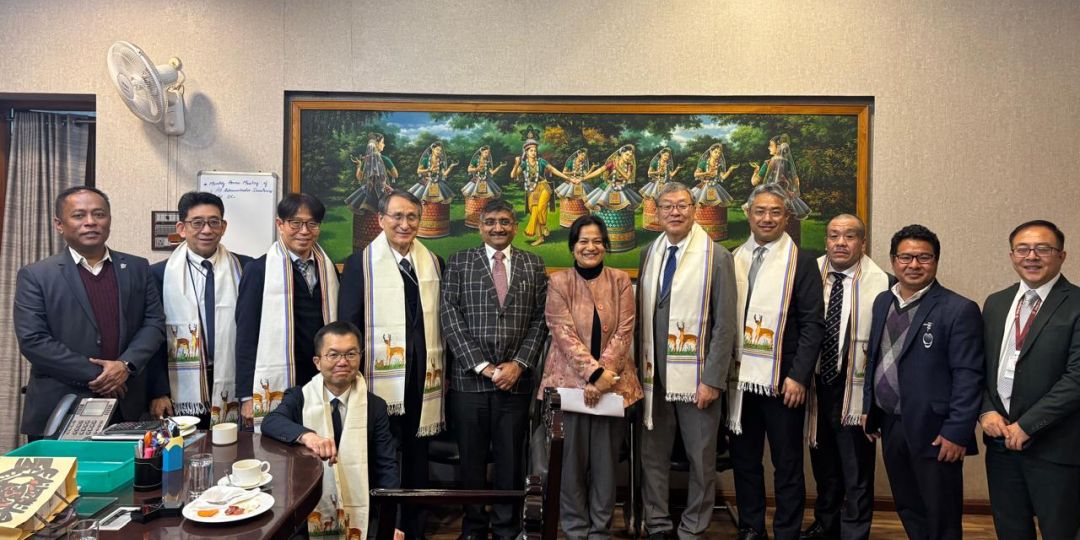
Japanese Delegation Visits Manipur to Boost Human Resource Ties
IMPHAL – A distinguished Japanese delegation from the Kagawa Prefectural Assembly recently visited Manipur with the goal of deepening bilateral cooperation in human resource development and sectoral collaboration. The delegation held high-level discussions with officials from the Government of Manipur, signaling a mutual desire to explore new avenues for partnership.
Strategic Meetings with Top State Officials
The Japanese team met with the Chief Secretary of Manipur and the Secretary for Skills, Labour, Employment, and Entrepreneurship. These meetings were aimed at identifying shared interests and exploring mechanisms to facilitate structured collaboration. In addition, a comprehensive session chaired by the Additional Chief Secretary of Trade, Commerce, and Industries was held at the Old Secretariat in Babupara.
This platform allowed both sides to engage in in-depth discussions on potential cooperative ventures, particularly in the realm of institutional linkages and people-to-people exchanges. The dialogue was marked by mutual respect and a shared understanding of the benefits of international collaboration in workforce development.
Presentation on Kagawa’s Socio-Economic Strengths
During the discussions, the head of the Japanese delegation presented an overview of Kagawa Prefecture’s socio-economic landscape, industrial capabilities, and its proactive approach toward foreign human resource engagement. The presentation underscored Japan’s growing interest in skilled labor from abroad to meet increasing domestic demands.
The delegation expressed specific interest in sectors such as agriculture, forestry, construction, manufacturing, wholesale and retail trade, accommodation and food services, and especially social welfare, with a strong emphasis on nursing care. The Japanese officials conveyed their readiness to explore structured avenues for cooperation that would be mutually beneficial for both regions.
Manipur’s Response and Areas of Interest
Manipur’s officials, representing departments including Trade, Commerce and Industries, Health and Family Welfare, Agriculture, and Forests, actively participated in the discussions. They provided insights into the state’s capabilities and ongoing initiatives in skill development, particularly in healthcare and nursing sectors.
Manipur emphasized its potential to contribute to Japan’s workforce needs, citing the state’s young population and growing emphasis on skill training. The state highlighted its commitment to developing a workforce equipped to meet international standards, aiming to forge long-term partnerships that could lead to employment opportunities abroad.
Opportunities for International Collaboration
The Japanese delegation’s visit marks a significant milestone in the strengthening of international ties between Manipur and Kagawa Prefecture. Both sides acknowledged the growing importance of global cooperation in addressing workforce shortages and promoting skill development.
The discussions also focused on the role of institutional partnerships in creating sustainable frameworks for knowledge exchange, cultural understanding, and economic cooperation. Both parties expressed optimism that the initial talks would lead to concrete outcomes in the near future.
Looking Ahead
This visit is expected to lay the groundwork for future collaborations that could result in bilateral agreements, training programs, and employment pathways for skilled workers from Manipur. The potential for student exchanges, professional training modules, and joint research initiatives was also discussed as part of the broader vision for cooperation.
Stakeholders from both regions are hopeful that this engagement will not only benefit their respective economies but also foster deeper cultural and educational ties. The shared commitment to human resource development stands as a testament to the power of international partnerships in driving progress and prosperity.
This article is inspired by content from Original Source. It has been rephrased for originality. Images are credited to the original source.