

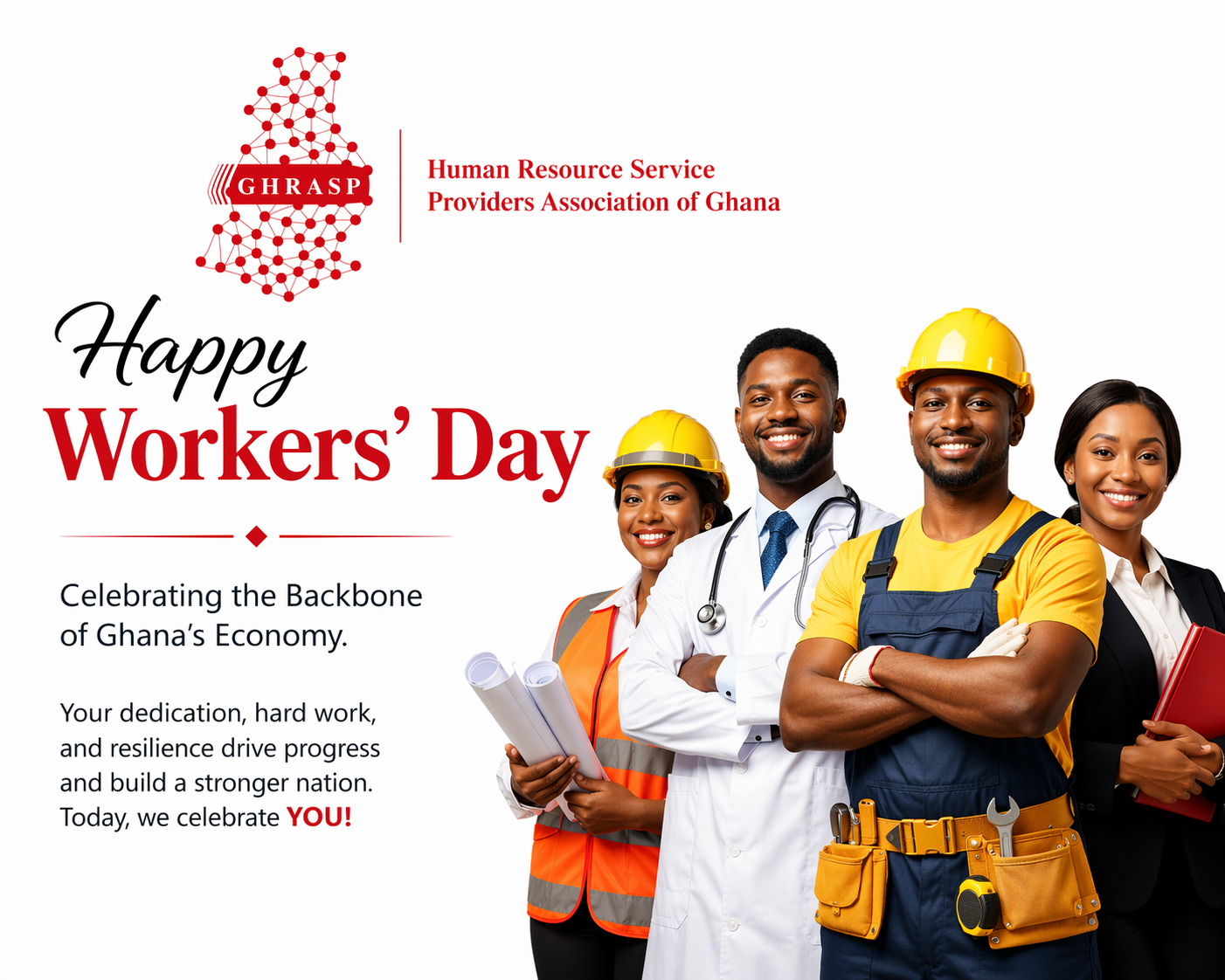
Celebrating Workers’ Day: Recognizing the Pillars of Ghana’s Economy
Employee engagement is central to the ongoing progress and resilience of Ghana’s workforce. As the Human Resource Service Providers Association of Ghana (GHRASP) commemorates Workers’ Day 2026, the nation pauses to honor the dedication and spirit of its workers—the very backbone of the economy.
The Significance of Workers’ Day in Ghana
Workers’ Day, also known as May Day, is a time when countries around the world pay tribute to the contributions of their labor force. In Ghana, this day is especially meaningful. It serves as an opportunity to reflect on the value of employee engagement and the essential role workers play in driving national development. GHRASP, a leading voice for HR professionals, uses this occasion to highlight the importance of recognizing and uplifting the workforce.
GHRASP’s Commitment to Employee Engagement
GHRASP stands as a champion for employee engagement in Ghana. The association believes that genuine engagement is not just about job satisfaction, but about empowering workers to reach their full potential. Through advocacy, training, and policy development, GHRASP ensures that the voices of Ghanaian employees are heard and that their needs are met in workplaces across the country.
During this year’s Workers’ Day celebration, GHRASP emphasized the link between engaged employees and economic growth. When workers feel valued and supported, they are more likely to be productive, innovative, and committed to organizational goals. This, in turn, strengthens Ghana’s position in an increasingly competitive global market.
Challenges and Opportunities for Ghana’s Workforce
Despite the progress made, there are still challenges facing the Ghanaian workforce. Economic pressures, global uncertainties, and rapid technological change all influence the working environment. GHRASP recognizes that addressing these issues requires a renewed focus on employee engagement. Investing in training, offering meaningful benefits, and fostering open communication are just a few ways organizations can support their teams.
Moreover, GHRASP encourages employers to adopt modern employee engagement strategies. Technology-driven platforms, regular feedback mechanisms, and recognition programs are becoming essential tools for keeping workers motivated and connected. As Ghana’s economy continues to evolve, the ability to engage and retain top talent will be a key determinant of long-term success.
The Role of Workers in National Progress
Ghana’s workers are more than just employees—they are innovators, caregivers, builders, and leaders. Their daily efforts fuel growth in every sector, from agriculture and manufacturing to education and healthcare. GHRASP’s message this Workers’ Day is clear: employee engagement must remain a top priority for both public and private organizations.
By acknowledging achievements and addressing challenges head-on, Ghana can create a more inclusive and resilient labor market. This not only benefits individual workers but also strengthens the nation as a whole.
Looking Forward: Building a Culture of Engagement
As the world of work transforms, GHRASP is committed to leading the conversation on employee engagement in Ghana. The association urges employers, policymakers, and HR professionals to embrace strategies that empower workers, promote diversity, and create opportunities for professional growth.
In conclusion, Workers’ Day 2026 is more than just a celebration—it is a call to action. GHRASP’s dedication to employee engagement underscores the belief that Ghana’s true wealth lies in its people. By investing in the workforce, the nation can unlock new levels of productivity, innovation, and prosperity for years to come.
This article is inspired by content from Original Source. It has been rephrased for originality. Images are credited to the original source.