

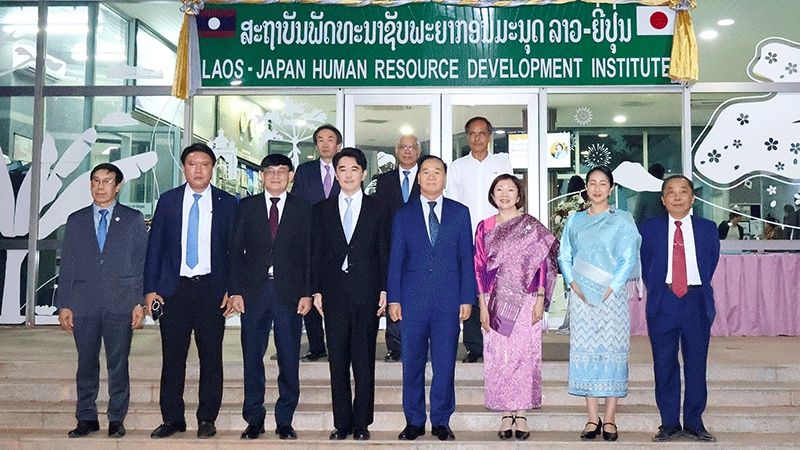
Celebrating 25 Years of Human Resource Development
The Laos-Japan Human Resource Development Institute (LJI) recently celebrated its 25th anniversary, marking a major milestone in its mission to advance human resource development in Laos. Since its establishment within the National University of Laos (NUOL), the Institute has played a pivotal role in nurturing economic leaders, entrepreneurs, and business professionals, laying the foundation for economic growth and stronger bilateral ties between Laos and Japan.
Origins and Growth of the Institute
Founded as one of Japan’s official overseas development assistance projects, LJI was established during a period when Laos urgently needed to cultivate a business-oriented workforce and create new employment opportunities. Over the past quarter-century, LJI has grown from a pioneering initiative to a central hub for human resource development, providing extensive training and educational programs in business management and leadership.
Japan’s sustained support for LJI has been substantial, with approximately 3.9 billion yen (about US$26 million) invested over 25 years. This support included both the construction of modern facilities and continuous technical cooperation. Notably, more than 200 Japanese experts have contributed their knowledge in Laos, while over 250 Lao professionals have benefited from specialized training in Japan.
Broadening Impact and International Collaboration
The commemorative ceremony, held at LJI’s campus, brought together high-level representatives from both Laos and Japan. Attendees included the Deputy Prime Minister and Minister of Education and Sports, Thongsalith Mangnomek, Chargé d’Affaires ad interim at the Japanese Embassy, Tasaka Takuro, as well as leaders from JICA, NUOL, and a range of partner organizations.
LJI’s success is rooted in its strong partnerships, including collaboration with the Japan International Cooperation Agency (JICA), the Japan Foundation, the Japan External Trade Organization (JETRO), and the Japanese Chamber of Commerce and Industry in Laos. These organizations have helped shape LJI’s offerings and expand its reach, ensuring that human resource development remains at the core of its mission.
Programs and Achievements
To date, LJI has delivered business training programs to over 20,000 participants, consistently achieving satisfaction rates above 90 percent. The Institute’s initiatives include:
- An MBA program tailored for working professionals
- The “Keiei-Juku” executive course, designed for business leaders
- Entrepreneurship support and startup initiatives
These programs have fostered a growing alumni network of more than 500 members, contributing to the broader development of the Lao business community. LJI also supports language and cultural exchange through Japanese-language education, in partnership with the Japan Foundation. Since 2012, this collaboration has helped meet the rising demand for Japanese-language skills in Laos and fostered deeper communication in business, education, and cultural fields.
Strengthening Laos-Japan Economic Ties
Business exchange programs, networking events, and business matching opportunities facilitated by LJI and JETRO continue to encourage collaboration between Lao and Japanese companies. These efforts have enabled Lao enterprises to explore new markets and connect with potential Japanese partners, further strengthening the economic relationship between the two countries and reinforcing the value of human resource development.
Looking to the Future
As Laos prepares for its graduation from Least Developed Country (LDC) status, the role of LJI in enhancing industrial competitiveness and workforce skills is more crucial than ever. The Institute is poised to remain a cornerstone for human resource development, supporting sustainable economic growth and acting as a bridge for bilateral friendship and cooperation between Laos and Japan.
With ongoing collaboration among Lao institutions and Japanese partners, LJI’s impact on the nation’s economic landscape is set to deepen, ensuring continued progress in business education, leadership, and entrepreneurship.
This article is inspired by content from Original Source. It has been rephrased for originality. Images are credited to the original source.