

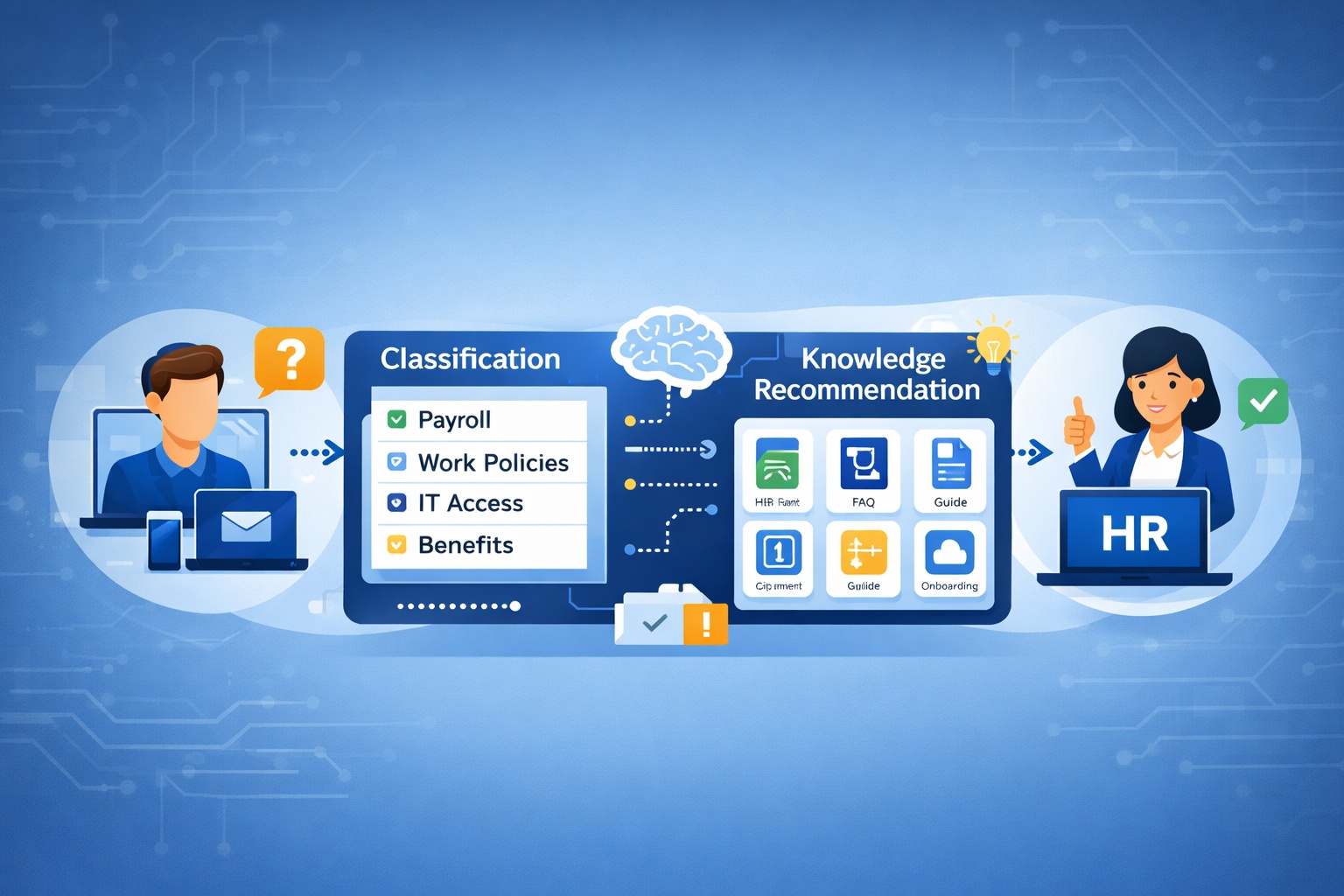
Transforming HR Service Delivery with AI Case Triage
As organizations grow and employee expectations evolve, AI case triage emerges as a critical tool for modern HR service delivery. Today’s HR teams are inundated with requests spanning payroll, benefits, access, and workplace policies. Meeting the demand for fast, accurate, and consistent support requires more than manual processes—enter intelligent automation. By leveraging AI case triage and knowledge recommendation systems, organizations can streamline case management, boost employee satisfaction, and prepare for scalable digital transformation.
Challenges in Traditional HR Case Management
Many HR departments still rely on manual triage processes, which introduce delays and inconsistencies. High case volumes, repetitive inquiries, and inconsistent categorization can bog down teams, resulting in longer resolution times and operational inefficiency. Without AI case triage or recommendation engines, employees often submit similar requests that could be resolved via self-service, adding unnecessary workload for HR agents. Manual classification is also prone to variability, as agents may interpret and route the same issue differently, leading to uneven employee experiences.
The Four-Layer AI Case Triage Framework
To address these challenges, a scalable framework for AI case triage and knowledge recommendation is essential. This framework typically comprises four core layers:
- Employee Request Intake: Aggregates requests from portals, emails, or chat tools, converting them into structured records. Key information includes request descriptions, employee roles, departments, urgency, and contextual metadata. Standardization at this stage is crucial for consistent downstream processing.
- Simulated AI Classification: Utilizes deterministic rules—like keyword detection and pattern matching—to mimic AI behavior. This enables accurate and explainable categorization of HR issues such as payroll queries or policy clarifications, without the need for complex machine learning models.
- Knowledge Recommendation Engine: Once classified, requests trigger contextual knowledge suggestions. Employees receive tailored links to policy documents, FAQs, or procedural guides, empowering them to resolve many issues independently and reducing overall case volume.
- Automated Routing and Lifecycle Management: Cases requiring human intervention are routed to the appropriate HR teams based on category, expertise, workload, and priority. Automated lifecycle management ensures timely status updates, SLA tracking, and escalation as needed.
Benefits of AI-Driven HR Case Triage
Implementing AI case triage and knowledge recommendation brings several transformative benefits:
- Faster and Consistent Responses: Automated classification and routing streamline resolution times and ensure uniform case handling.
- Reduced HR Workload: Effective knowledge management systems empower self-service, reducing support workload by up to 30% (Deloitte Insights, 2023).
- Enhanced Employee Experience: Employees enjoy faster, more accurate resolutions and greater transparency into the status of their requests.
- Scalability: The framework supports growing organizations without requiring a proportional increase in HR staffing.
- Transparency and Auditability: Automated processes ensure consistent documentation and make it easier to track and review case histories.
Responsible Automation in HR
While AI case triage offers significant advantages, responsible implementation is critical. Organizations should regularly review classification logic to ensure fairness, avoid bias in automated routing, and always provide human oversight for complex or sensitive cases. Ethical AI practices and transparency are essential for maintaining employee trust and confidence in HR decision-making (Harvard Business Review, 2021).
Conclusion: A Scalable Path to Intelligent HR Operations
AI case triage and knowledge recommendation are paving the way for intelligent HR service delivery. By simulating AI capabilities with structured automation, organizations can achieve greater efficiency, improve employee satisfaction, and scale their operations for future growth. Investing in these frameworks today prepares HR teams for the next wave of digital transformation in the workplace.
This article is inspired by content from Original Source. It has been rephrased for originality. Images are credited to the original source.