

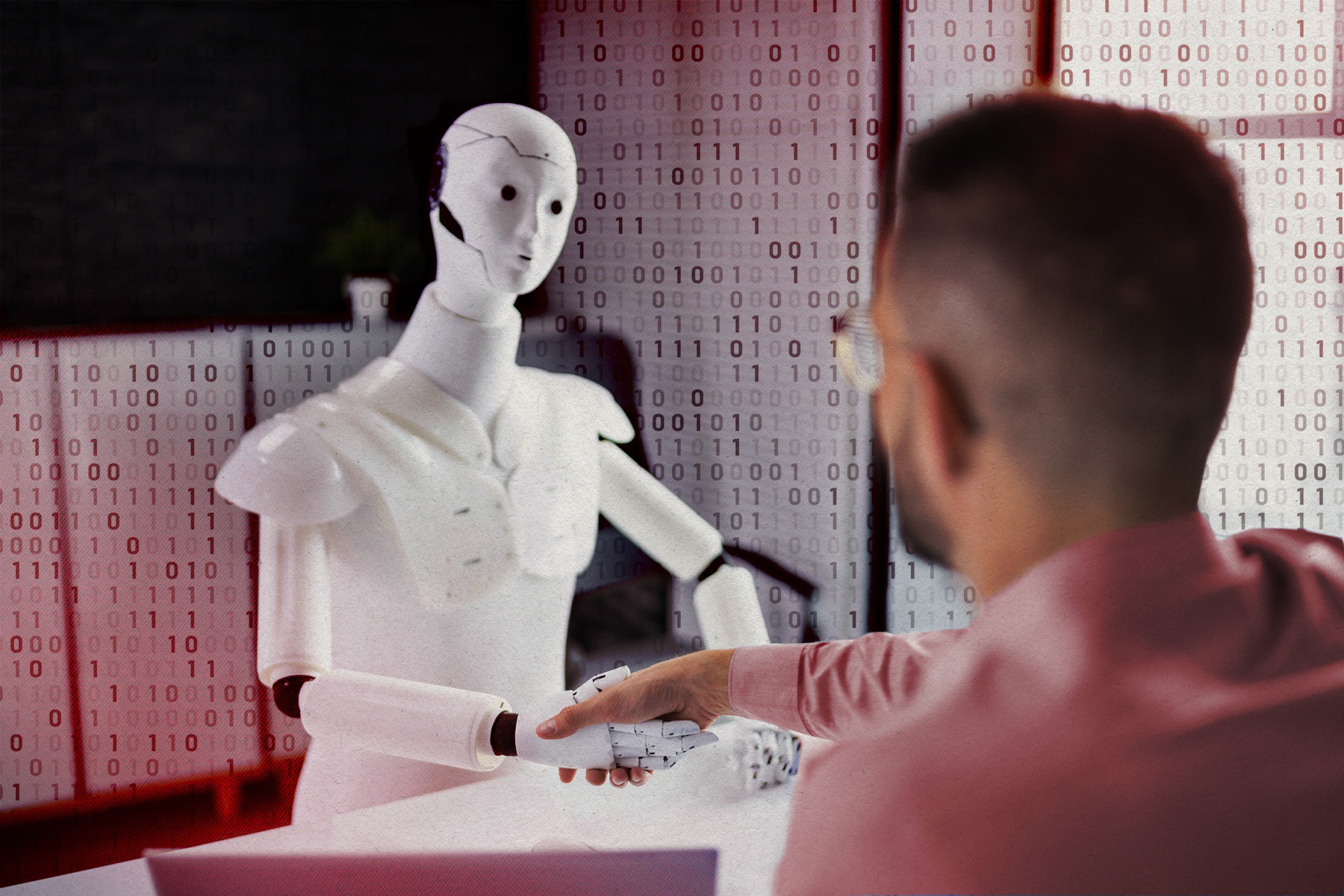
In May 2024, Adam, a UX designer candidate, applied for a position at Kroger, a major US-based grocery chain. His experience highlights the growing role of AI in hiring processes, where human interactions are replaced by algorithms. After applying, Adam received an invitation from HireVue, an AI-driven HR platform, to participate in a one-way recorded interview. The instructions were simple yet anxiety-inducing: ‘Show passion!!’ and ‘NO headphones can be used.’ This experience underscores a significant shift in recruitment practices that is reshaping the job market.
During the interview, Adam faced five questions related to his work experience, with a strict three-minute limit for each response. The absence of a human interviewer, the imperative to maintain eye contact with his webcam, and the overt analysis of his verbal responses unnerved him. The lack of transparency about the criteria for success added to his anxiety, leaving him feeling like he had to meet unspoken standards.
Adding to Adam’s stress were unexpected ‘brain teaser’ questions, including complex matching and memory games. He questioned the relevance of these tasks to the UX designer role, deeming the whole process unfair. Despite scoring 97 percent, Adam did not receive a follow-up interview and was left in the dark about why.
Kroger is among the 98 percent of Fortune 500 companies leveraging AI in hiring. According to an Indeed Canada survey, 87 percent of HR professionals use AI tools for tasks such as generating job descriptions, scanning résumés, and conducting background checks. However, the rise of AI in recruitment has not been without controversy. A Pew Research Center report indicates that two-thirds of Americans are apprehensive about applying for jobs where AI influences hiring decisions. The fear is not unfounded; many job seekers feel reduced to mere data points, stripped of their individuality.
HireVue, a pioneer in AI-driven recruitment, has conducted over 70 million one-way job interviews. It analyzes candidate body language, word choice, and voice tone to generate employability scores. Other platforms like Plum and Harver offer gamified tests to evaluate problem-solving skills and personality traits. Yet, these tools face criticism for perpetuating the biases they claim to eliminate.
Hilke Schellmann, author of ‘The Algorithm: How AI Decides Who Gets Hired, Monitored, Promoted, and Fired and Why We Need to Fight Back Now,’ warns of the discriminatory potential of AI hiring tools. Faulty résumé parsers can inadvertently discriminate against large groups of people based on biased keywords or defects. This bias extends to demographic factors like race and gender, often leading to unfair outcomes.
The legal ramifications are significant. Derek Mobley, a Black job seeker with depression and anxiety, has sued Workday for alleged discrimination in its AI-driven screening process. Previous incidents, such as Amazon’s biased AI recruiting system and LinkedIn’s job-matching algorithms favoring men, highlight the risks of relying solely on AI.
Accessibility is another concern. Many AI hiring tools, reliant on text-to-speech transcription, may disadvantage individuals with speech impairments or accents. Candidates with disabilities face hurdles in a system designed without their needs in mind, as algorithms often lack adequate training data from underrepresented groups.
The opacity of AI decision-making, or ‘black box AI,’ compounds these challenges. Matthew Scherer of the Center for Democracy and Technology points out that companies are not typically required to disclose their AI systems’ inner workings. Job seekers may be unaware of the AI’s involvement in their evaluation, relying on vendor claims of fairness.
The ethical concerns surrounding AI hiring tools are further complicated by limited legislation. Ontario’s Bill 149 and New York City’s Local Law 144 aim to increase transparency, but critics argue that vague definitions and enforcement gaps undermine their effectiveness. The rollback of AI regulations under the Trump administration in 2025 further weakens safeguards.
In response to these challenges, job seekers are turning to generative AI tools to craft résumés and cover letters, creating a cycle of AI evaluating AI. Schellmann warns of a future where hiring becomes a closed loop, with algorithms, not people, determining career paths. She emphasizes the need for human judgment in assessing leadership potential and team dynamics, qualities that AI cannot yet gauge.
Note: This article is inspired by content from https://thewalrus.ca/human-resources-ai/. It has been rephrased for originality. Images are credited to the original source.