

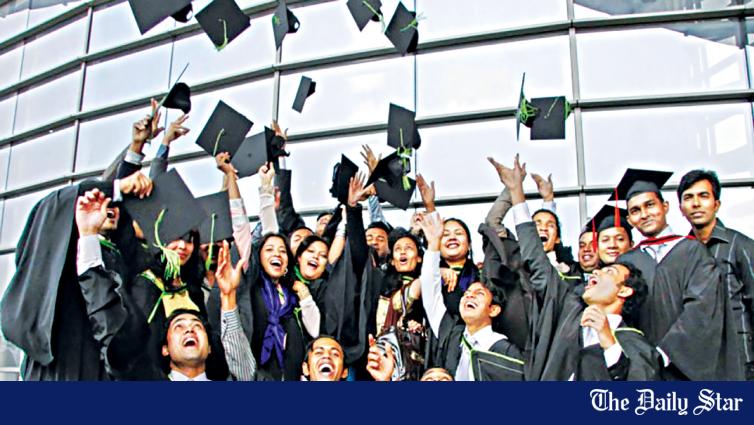
The Untapped Potential of Bangladesh’s Youth
Youth represent the most valuable resource of a nation, especially for countries like Bangladesh that have limited natural endowments. With a population dense in youthful energy, the country has a unique opportunity to leverage this demographic for robust economic growth. However, this potential remains largely underutilized due to systemic issues in education, training, and employment.
Currently, Bangladesh has a youth labor force of around 27 million, which makes up 36 percent of the total labor force. Alarmingly, 2 million of them are unemployed, constituting 79 percent of the country’s total unemployed population. Another 8 million young individuals are not engaged in education, employment, or training (NEET), symbolizing a massive missed opportunity for national development.
Mismatch Between Education and Employment
One of the key problems lies in the disconnect between higher education and job market needs. In 2022, Bangladesh’s universities produced 700,000 graduates, but the economy could only absorb around 300,000. This oversupply leads to increasing graduate unemployment, which has quadrupled over the last decade—from 200,000 in 2013 to 900,000 in 2023. A third of all unemployed people in the country now hold university degrees.
The field of study significantly affects a graduate’s employability. For instance, Political Science graduates face a 23 percent unemployment rate, while only 0.17 percent of English graduates remain jobless. This indicates a critical need for aligning academic programs with market demands.
The Changing Nature of Work
The global workforce is evolving rapidly due to technological advancements and structural changes in manufacturing and services. Automation and AI are reshaping job markets, creating demand for new roles while making others obsolete. An estimated 133 million high-skill jobs have emerged recently, but 75 million jobs may have been lost to automation.
High-demand roles now include data scientists, AI specialists, cybersecurity analysts, and e-commerce experts. To prepare for this shift, countries are overhauling their education systems, emphasizing STEM—Science, Technology, Engineering, and Mathematics. In China, 40 percent of graduates are from STEM fields; in India, it’s 30 percent.
Bangladesh’s Current Standing
Bangladesh ranks 113th out of 141 countries in the Global Knowledge Index 2024 and 106th out of 133 in the Global Innovation Index. The top in-demand skills in the country include teamwork, analytical thinking, technological literacy, and creativity. However, the current education system is not adequately equipping students with these skills.
To remain competitive, Bangladeshi youth must not only match their domestic peers but also compete globally. This necessitates a comprehensive reform of the national education and training infrastructure.
Steps Toward Human Resource Development
To effectively harness youth potential, Bangladesh must take a multi-pronged approach:
- Skill Assessment: Identify existing skills and gaps, considering both domestic and international job markets. A comprehensive human resource plan should align with the national development agenda.
- Education System Evaluation: Review academic structures, syllabuses, and teaching methods to assess readiness for future workforce demands.
- System Overhaul: Redesign the entire education system to include digital literacy and AI, rooted in national culture but informed by global best practices.
- Ongoing Training: Continuous skill development must be ensured for students, employees, and educators alike, keeping up with rapidly changing technologies and methodologies.
- Skill-Improvement Programs: Strengthen industry-academia partnerships, offer mentorships, in-house training, language programs, and include people with disabilities in all initiatives.
- Regular Monitoring: Establish a framework for continuous evaluation and refinement of human resource development strategies based on performance metrics.
- Increased Investment: Allocate 4-6 percent of GDP to education and 5-7 percent to health. Currently, Bangladesh spends only 1.7 percent and less than 1 percent on these sectors respectively, far less than countries like India and Vietnam.
A Call to Action
The world is changing rapidly, and so are the skills required to succeed in it. Bangladesh must adapt by investing wisely in its youth—its most promising asset. Reforms in education, targeted training, and adequate funding are essential to ensure that young people are not just employable but are also driving forces of innovation and growth.
Bangladesh’s youth hold the key to its future prosperity. The nation must act now to unlock this potential and secure a thriving economy in the decades to come.
This article is inspired by content from Original Source. It has been rephrased for originality. Images are credited to the original source.