

Inauguration of PRISM–FIMC 2025 Honors Dr. Pritam Singh
New Delhi witnessed the commencement of the three-day Dr. Pritam Singh Memorial & FORE International Management Conference (PRISM–FIMC) 2025 at Hotel Holiday Inn, Aerocity. The event kicked off with a traditional lamp-lighting ceremony, signifying the beginning of an intellectual journey focusing on leadership, societal growth, and future-oriented management practices.
The conference, scheduled from November 19 to 21, has drawn a wide array of participants including industry veterans, academic scholars, policymakers, and management professionals. This gathering aims to delve deep into global trends and the evolving dynamics of education and leadership.
Dhananjay Singh Reflects on Dr. Pritam Singh’s Enduring Vision
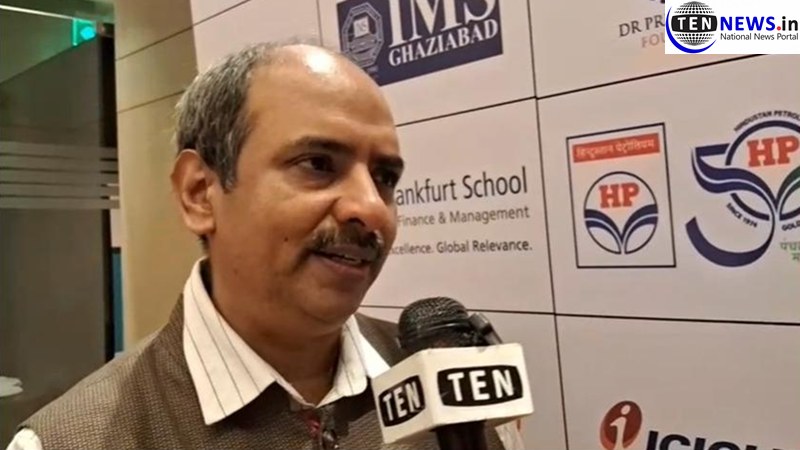
Speaking at the sidelines of the conference, Dhananjay Singh, Director General of the National Human Resource Development Network (NHRDN), emphasized the event’s alignment with Dr. Pritam Singh’s lifelong mission. “This is the fifth edition of the conference, and it continues to embody Dr. Singh’s vision of a better society through empowered leadership and inclusive development,” Singh stated.
He highlighted the increasing global engagement with PRISM–FIMC, noting the presence of international delegates. “The diversity in participation speaks volumes about the growing influence of this platform. We are witnessing delegates from various countries, united by the ideals of Dr. Singh,” he said.
Thought Leaders Converge for High-Impact Dialogues
Singh shared that this year’s program features a distinguished lineup of speakers, including the ACT Chairman and the Managing Director and CEO of Niva Bupa. Representatives from public sector enterprises, private firms, and multinational corporations are actively contributing to the discussions.
“These diverse voices are central to addressing the complex challenges of our times. The shared commitment to Dr. Pritam Singh’s ideals makes this conference a unique confluence of ideas and action,” Singh remarked.
Leadership in a Changing Global Context
One major theme of the conference is navigating the rapidly transforming geopolitical and socio-economic landscape. Singh emphasized the need for strategic foresight and unified efforts. “We must not only understand the present but also envision and prepare for the future. The challenges ahead demand both clarity of thought and collective will,” he noted.
He addressed the integral role of management principles in public services, drawing connections between administrative systems and management science. “Management isn’t a siloed function; it’s embedded in every institutional framework—be it revenue services, foreign affairs, or law enforcement. What we need is a re-imagining of roles to meet emerging realities,” Singh explained.
Capacity Building and Government Reforms
Singh lauded the establishment of the Capacity Building Commission as a pivotal reform initiative. “This government is ahead of the curve. They are not reacting to change—they are leading it. Several transformative efforts are underway that may not be visible yet but will significantly redefine administrative efficiency in the coming decade,” he said.
He stressed that reforms should ultimately aim to enhance public service delivery, the cornerstone of all governance systems.
Balancing Conceptual Knowledge with Practical Execution
Discussing the changing competency requirements, Singh pointed out the importance of integrating conceptual understanding with practical skills. “Neither theoretical knowledge nor hands-on skills alone suffice. The worlds of Aryan and Ambani—symbolizing academia and industry—must converge. We need leaders who can think critically and execute effectively,” he asserted.
He advocated for a balanced approach that includes both analytical and creative capabilities, highlighting that true leadership arises from the harmony between left-brain logic and right-brain creativity.
Future-Focused Leadership and Institutional Transformation
As PRISM–FIMC 2025 progresses, the conference will host comprehensive discussions on topics such as institutional reform, talent development, global competitiveness, and technology integration. The goal is to equip current and future leaders with the tools to navigate an increasingly complex and interconnected world.
Notable contributions during the event came from eminent figures such as Dr. H. Chaturvedi, Dr. Bhimaraya Meitry, and Dr. Ravi Jain, along with several senior management professionals. The prestigious Dr. Pritam Singh Awards were presented to distinguished individuals including Dr. Pankaj Bansal, R. P. Singh, and Prof. K. R. S. Murthy, in recognition of their impactful work in leadership and management.
PRISM–FIMC 2025 continues to inspire and engage a broad spectrum of stakeholders, building on Dr. Pritam Singh’s enduring legacy of purposeful leadership and societal transformation.
This article is inspired by content from Original Source. It has been rephrased for originality. Images are credited to the original source.