

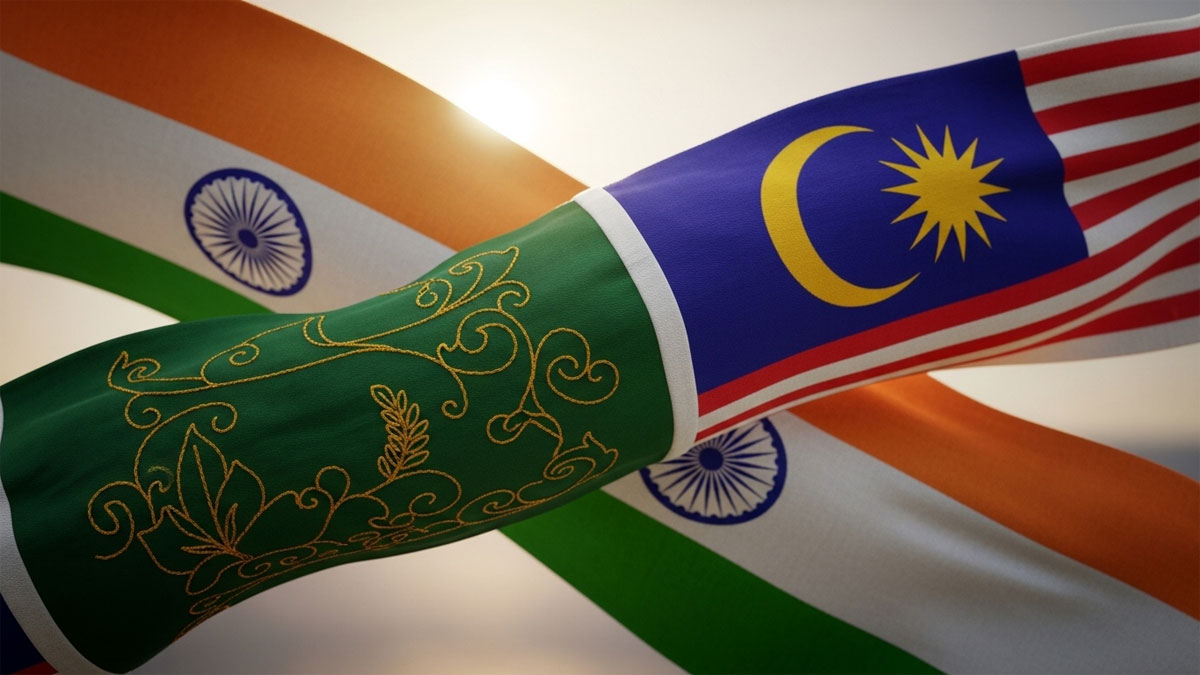
India-Malaysia Relations Reach New Strategic Heights
The August 2024 visit of Malaysian Prime Minister Anwar Ibrahim to New Delhi marked a pivotal moment in the diplomatic trajectory between India and Malaysia. The bilateral relationship, previously under the Enhanced Strategic Partnership (ESP), was elevated to a Comprehensive Strategic Partnership (CSP), signaling a renewed commitment to deeper collaboration across multiple sectors.
This elevation coincided with the tenth anniversary of India’s Act East Policy, launched in 2014. The meeting between the two prime ministers reaffirmed a mutual desire to strengthen ties in areas such as politics, defense, economy, science and technology, culture, and digital cooperation.
Foundation of Historical and Economic Ties
India and Malaysia share a unique geopolitical and cultural bond, reinforced by their geographical proximity and a significant Indian diaspora in Malaysia. India stands as the world’s fourth-largest economy, while Malaysia is set to chair ASEAN in 2025—a role that underscores its regional importance.
India’s Act East Policy and Malaysia’s Madani Economic Framework, introduced in 2023, have synergized effectively, leading to a robust economic relationship. Bilateral trade in goods and services reached $20.01 billion in 2023-2024. India has emerged as one of Malaysia’s top 10 trading partners, and within ASEAN, Malaysia is India’s third-largest trading partner, after Singapore and Indonesia.
Trade between the two nations includes a variety of products such as machinery, organic chemicals, petroleum products, palm oil, rubber, and electronics. India complements Malaysia’s industrial capabilities with its strengths in IT services, pharmaceuticals, textiles, and manufacturing.
Accelerating Digital Technology Collaboration
One of the most promising aspects of the CSP is the emphasis on digital technology collaboration. A memorandum of understanding was signed to foster cooperation in critical tech domains such as cybersecurity, 5G, quantum computing, cloud services, and the Internet of Things (IoT).
These efforts aim to benefit both countries by attracting investments and supporting small and medium-sized enterprises. India’s advancements in digital infrastructure—such as Aadhaar, UPI, and e-market platforms—offer a model that Malaysia can adapt to enhance its own digital ecosystem.
Digital technology already contributes nearly 12% to India’s GDP and is projected to account for 20% by 2030. This rapid growth presents an opportunity for Malaysia to integrate digital technologies into its economic restructuring agenda under the Madani Framework.
Strengthening Semiconductor and Supply Chain Resilience
India is focused on building a resilient supply chain, especially in semiconductors. Malaysia, a global leader in semiconductor manufacturing, fits strategically into India’s plans. This alignment supports both countries in achieving economic resilience and technological self-reliance.
Additionally, the Malaysia–India Digital Council, established in January 2025, aims to enhance bilateral digital trade, facilitate technology exchange, and mobilize skilled talent between the two nations.
Human Resource Development and Mobility
Human resource development forms a vital pillar of the CSP. Malaysia’s Ministry of Human Resources launched a new National Human Resources Policy Framework in May 2024 to guide workforce development through 2030. The policy incorporates skills training and embraces emerging technologies to prepare youth for the evolving job market.
This initiative aligns with India’s push to develop a modern technological ecosystem in sectors such as healthcare, education, agriculture, and manufacturing. The shared focus on youth empowerment and skill development is expected to generate substantial employment opportunities in both countries.
A new bilateral agreement was also signed to streamline recruitment, employment, and repatriation processes. This agreement includes 17 detailed provisions covering labor rights, safety, welfare, and terms of employment. It institutionalizes the long-standing movement of skilled workers between the two nations.
The Role of the Indian Diaspora in Bilateral Ties
India and Malaysia’s relationship is further enriched by the Indian diaspora in Malaysia, numbering over 2.75 million and comprising about 9% of the country’s population. This community, largely descended from indentured laborers brought during British colonial rule, continues to serve as a cultural and economic bridge between the two nations.
Looking Ahead: A Transformative Partnership
The CSP signifies a transformative phase in India-Malaysia relations. Enhanced collaboration in digital technologies, trade, and human capital development promises to bring tangible benefits to both nations. With visionary leadership and complementary economic models, the partnership is well-positioned to thrive in the coming years.
India’s Act East Policy and Malaysia’s Madani Economic Framework have laid the groundwork for this renewed bilateral engagement. As these frameworks mature, they will continue to shape a future of mutual growth, regional stability, and technological advancement.
This article is inspired by content from Original Source. It has been rephrased for originality. Images are credited to the original source.