

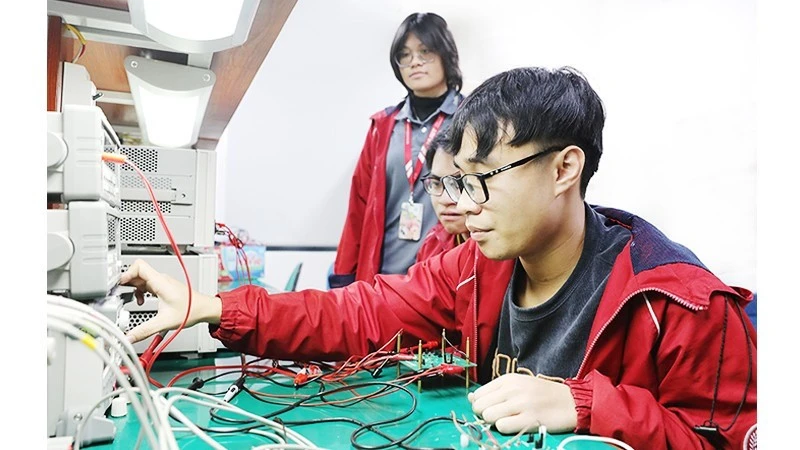
The Imperative for High-Quality Human Resources
In the current global landscape, the development of high-quality human resources has emerged as a cornerstone for national progress. As economies grow increasingly knowledge-based and technology-driven, nations must prioritize not only training but also retaining top talent. This shift requires more than just policy declarations—it demands measurable outcomes in education, workforce readiness, and innovation.
Vietnam, like many emerging economies, is recognizing that human capital is a key driver of sustainable growth. The nation’s leadership is calling for a comprehensive approach to nurturing talent that aligns with the evolving demands of the labor market.
From Policy to Practice: Bridging the Gap
While numerous policies have been introduced to enhance human resource development, experts argue that implementation remains uneven. The real challenge lies in translating visionary strategies into tangible results. This includes upgrading curricula, improving teaching quality, and ensuring that graduates possess not only theoretical knowledge but also practical skills relevant to their fields.
To address these gaps, Vietnamese educational institutions are being encouraged to collaborate more closely with industries. Such partnerships are instrumental in creating training programs that are responsive to economic needs, thereby enhancing graduate employability and reducing skill mismatches.
Digital Transformation in Education
One of the most promising developments in the journey toward high-quality human resource development is the integration of digital technology in education. A recent example is the launch of a digital library in Da Nang, funded by a locality in the Republic of Korea. This initiative aims to broaden access to educational resources and foster a culture of continuous learning.
The digital library is expected to benefit students, educators, and researchers by providing a platform for knowledge exchange and innovation. By embracing digital tools, Vietnam is taking a significant step toward modernizing its educational infrastructure and enhancing learning outcomes.
Retaining Talent: A National Priority
Attracting and retaining skilled professionals is another critical aspect of developing high-quality human resources. Vietnam faces stiff competition not only from regional neighbors but also from developed countries that offer more attractive career opportunities. To counter this trend, the government is focusing on improving workplace conditions, offering competitive salaries, and creating an environment that encourages professional growth.
Additionally, efforts are being made to promote innovation and entrepreneurship among young people. By supporting start-ups and research initiatives, Vietnam hopes to nurture a generation of professionals who are both capable and committed to contributing to national development.
Elevating the Quality of Training Programs
Improving the content and methodology of training programs is essential for ensuring that graduates are job-ready. Emphasis is now being placed on outcome-based education, where success is measured not by the number of graduates but by their ability to meet real-world demands.
This involves incorporating soft skills, critical thinking, and problem-solving into curricula. Technical and vocational education and training (TVET) institutions are also being reformed to provide more hands-on learning experiences, better aligning with the needs of industries such as manufacturing, IT, and healthcare.
Collaboration for Collective Progress
Developing high-quality human resources is not a task for the government alone. It requires a coordinated effort among educational institutions, private sector companies, local authorities, and international partners. Collaborative frameworks can help pool resources, share best practices, and scale successful models across regions.
International cooperation, such as the partnership that enabled the creation of Da Nang’s digital library, exemplifies how global alliances can support national education goals. These alliances also open doors for student exchanges, joint research, and capacity-building initiatives, thereby enriching the domestic talent pool.
Looking Ahead: A Strategic Vision
As Vietnam charts its course toward becoming a high-income nation, the importance of a skilled and resilient workforce cannot be overstated. Policymakers are now tasked with ensuring that human resource development remains at the forefront of national planning. This includes increased investment in education, greater autonomy for institutions to innovate, and robust mechanisms for monitoring and evaluation.
The journey is complex, but the destination is clear: a Vietnam where every citizen has the opportunity to reach their full potential, and where the collective strength of human talent drives the nation forward.
This article is inspired by content from Original Source. It has been rephrased for originality. Images are credited to the original source.