

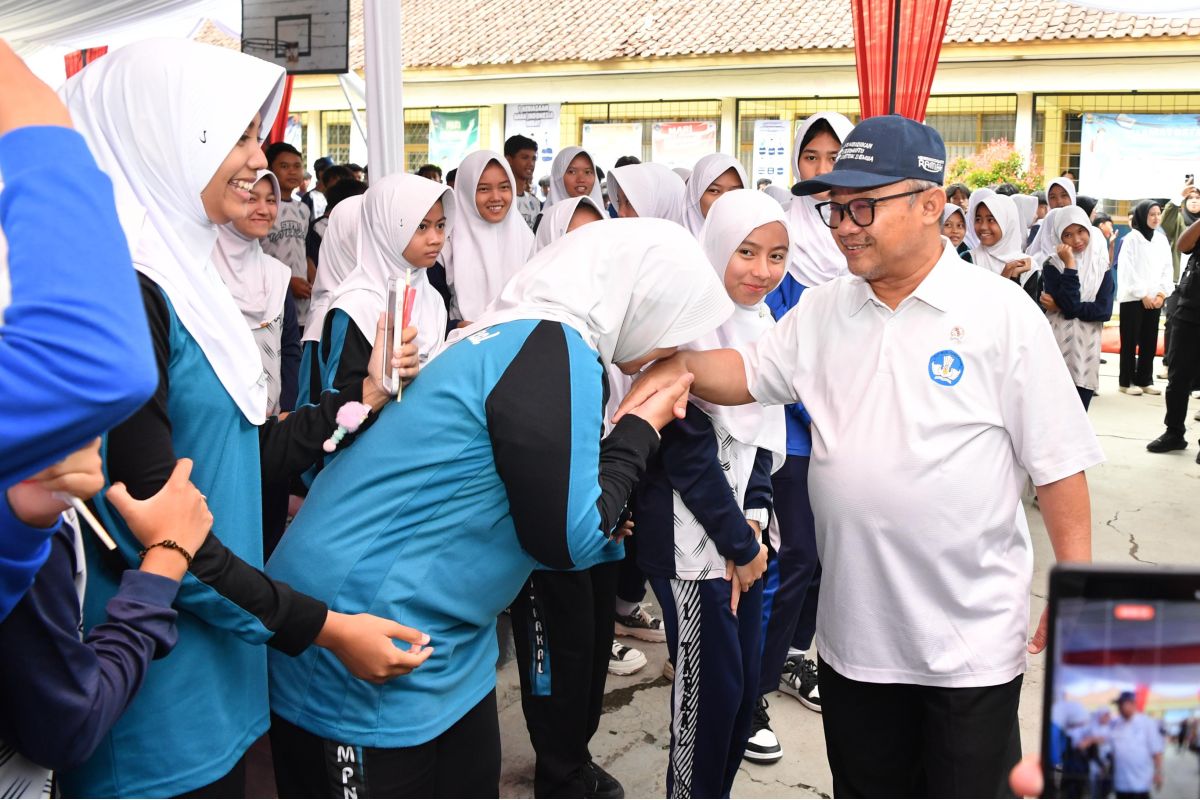
Government Emphasizes Student Talent Development
JAKARTA — Minister of Primary and Secondary Education Abdul Mu’ti underscored the importance of student talent management as a strategic effort to cultivate high-quality and competitive human resources. During a press briefing on Saturday, Mu’ti reiterated the government’s commitment to providing equal opportunities for all students to maximize their potential in accordance with national education objectives.
“We are ensuring that every student, regardless of their background, has access to the tools and support necessary to thrive. This is central to achieving our long-term educational and economic goals,” said Mu’ti.
New Regulation to Guide Talent Management
To institutionalize this commitment, the Ministry has enacted Ministerial Regulation No. 25 of 2025 on Student Talent Management. This new policy provides a comprehensive framework for discovering, nurturing, and utilizing student talents, interests, and abilities in a structured and sustainable way.
The regulation requires collaboration among educational institutions, regional authorities, and the central government to implement student talent management continuously and inclusively. It emphasizes a student-centered, inclusive, collaborative, and sustainable approach to ensure equitable access to development opportunities for all learners.
Structured Stages of Talent Development
The regulation details several key stages in the talent management process:
- Identification – Recognizing students’ individual talents and interests.
- Development – Providing resources and guidance for growth.
- Actualization – Enabling students to apply their talents.
- Appreciation – Acknowledging achievements and excellence.
- Capitalization – Leveraging talents for national competitiveness.
These stages are to be implemented in an integrated and tiered manner, beginning at the school level and progressing through regional, national, and even international stages.
SIMT Murid: A National Talent Database
To support this initiative, the Ministry has launched the Student Talent Management Information System (SIMT Murid), an integrated national database designed to facilitate the identification and tracking of student talents across the country. The system aims to provide educators and policymakers with accurate, real-time data to inform decisions and support student development effectively.
“SIMT Murid will be a critical tool in ensuring that no student is overlooked and that every talent is recognized and nurtured,” Mu’ti explained.
Holistic Talent Development Activities
The implementation strategy includes a blend of intra-curricular, co-curricular, and extracurricular activities designed to foster diverse talents. Students will also be encouraged to participate in both competitive and non-competitive talent showcases and programs, which offer valuable platforms for developing confidence and competence.
High-achieving students will receive recognition and support through appreciation programs and career facilitation initiatives. These are intended to guide them into relevant career paths and higher education opportunities that align with their talents.
Replacing Outdated Policies
Ministerial Regulation No. 25 of 2025 replaces outdated policies that no longer align with current educational challenges and aspirations. The Ministry, in collaboration with regional administrations, will conduct regular monitoring and evaluations to assess the effectiveness of the new regulation and make necessary adjustments.
“Continuous assessment is vital to ensure the policy remains responsive to student needs and national development goals,” said Mu’ti.
Broader National Strategy
This policy aligns with Indonesia’s broader efforts to enhance human resource competitiveness on a global scale. It complements other national initiatives, including the blueprint for competitive human resource development and the upcoming National Talent Management program led by the National Research and Innovation Agency (BRIN).
These efforts reflect a unified strategy to prepare Indonesian youth for the complex demands of the modern workforce by recognizing and developing their unique talents from an early age.
This article is inspired by content from Original Source. It has been rephrased for originality. Images are credited to the original source.