

Accelerating Human Resource Mobility Between India and Japan
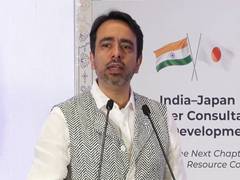
Human resource mobility has become a critical focus in international workforce development, especially with growing collaboration between India and Japan. At the recent India-Japan Stakeholder Consultation on Skill Development, Jayant Chaudhary, Minister of State (Independent Charge) for the Ministry of Skill Development and Entrepreneurship (MSDE), called for innovative funding pathways and deeper institutional cooperation to meet the ambitious target of deploying 50,000 skilled Indian workers to Japan.
The Need for Institutional Collaboration
During his address, Chaudhary highlighted the importance of bridging gaps between domestic and international stakeholders to facilitate smooth human resource mobility. Despite the strong cultural ties and mutual respect existing between the two nations, he noted that government-to-government mobility initiatives face significant procedural and administrative challenges. These hurdles hinder the alignment of India’s vast demographic potential with Japan’s pressing workforce needs.
Chaudhary remarked, “The challenge is for institutions to understand each other. Different rules, procedures, and institutional legacies often slow progress toward our shared goals. Our aspiration to send 50,000 skilled workers is bold, but institutional bottlenecks restrict our current achievements.”
Innovative Funding and Shared Ownership
To overcome these obstacles, Chaudhary urged officials from the Ministry of External Affairs (MEA), state governments, the National Skill Development Corporation (NSDC), and Japanese industry leaders to formulate sustainable financial mechanisms. He stressed the necessity for shared ownership and realistic execution strategies that can turn bilateral agreements into tangible results for human resource mobility.
He stated, “We need to come up with innovative models to fund these aspirations within India. Building equivalence and understanding between our institutions is crucial so they can operate in harmony. The strong people-to-people connections we already enjoy should be leveraged to build trust and create clear pathways between our two institutions.”
Role of Education and Cultural Orientation
Chaudhary also emphasized the critical role of comprehensive language and cultural orientation for Indian workers preparing to move abroad. He pointed out that educational programs must address both linguistic nuances and expectation gaps, ensuring smooth integration in Japanese workplaces and furthering human resource mobility.
“There are always gaps—linguistic, cultural, and procedural. Our educational frameworks must help fill these gaps,” he explained. “People-to-people connection happens naturally, but institutional alignment requires deliberate effort and ongoing dialogue.”
Shared Values and the Path Forward
Drawing parallels between Indian hospitality and Japan’s Omotenashi (selfless service), Chaudhary reflected on how deep-rooted cultural identities form a strong foundation for economic and developmental partnerships. He underscored that these shared values can drive successful workforce exchanges and support the broader vision of Viksit Bharat (developed India).
“I am hopeful that, together, we will develop a roadmap for real progress,” Chaudhary concluded. “But a roadmap is only effective when it is understood, accepted, and owned by every stakeholder. Regular institutional consultations are essential to convert agreements into real mobility outcomes.”
Conclusion: A New Era for Human Resource Mobility
As India and Japan deepen their cooperation on skill development and workforce exchange, the focus on human resource mobility will remain central. By bridging institutional gaps, leveraging cultural affinities, and investing in innovative funding models, both nations can achieve their shared vision. Accelerating human resource mobility will not only benefit the economies of India and Japan but also set a precedent for international workforce cooperation in the years ahead.
This article is inspired by content from Original Source. It has been rephrased for originality. Images are credited to the original source.