

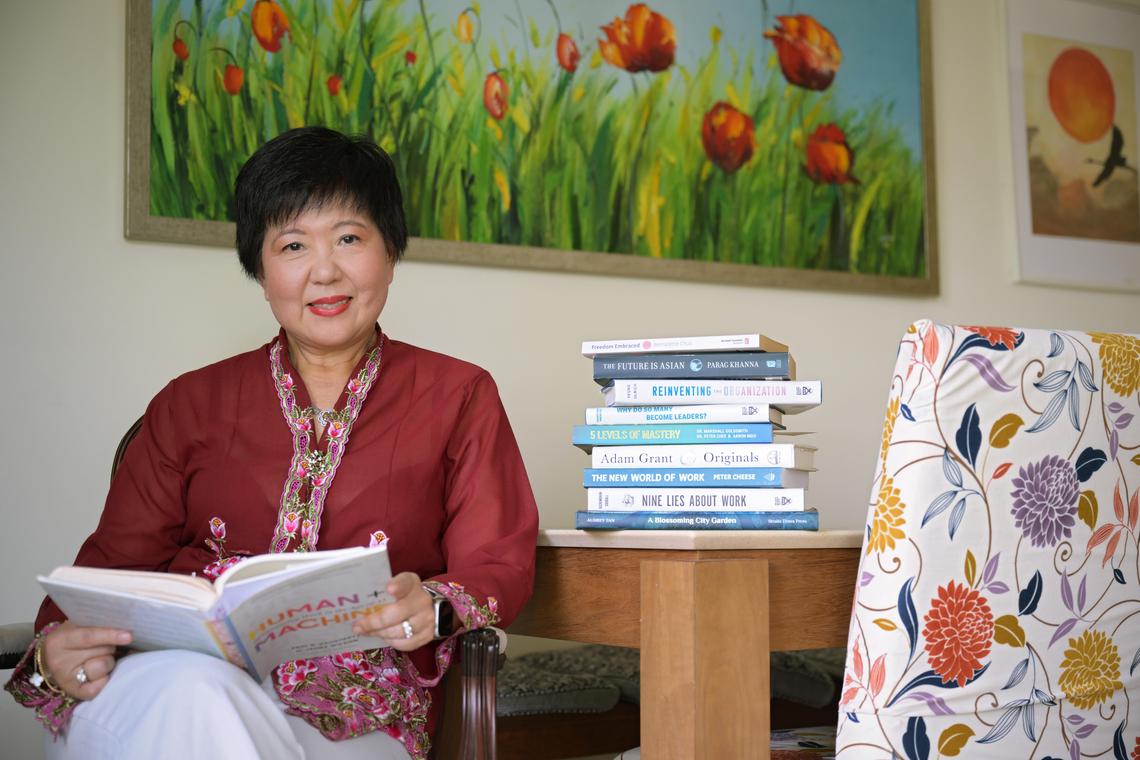
Low Peck Kem: Leading HR Through the Power of Reading
Ms. Low Peck Kem, 62, is a prominent figure in Singapore’s human resource sector. As the chief human resource officer and adviser for workforce development at the Public Service Division, she holds a pivotal role in shaping the nation’s workforce strategies. Earlier in 2025, she was elected president of the Singapore Human Resources Institute (SHRI), the country’s leading professional body for human resource practitioners. Notably, her appointment coincides with SHRI’s 60th anniversary—a milestone year for the organization.
Ms. Low brings with her not just decades of experience, but also a unique approach to leadership: using reading as a tool for problem-solving and professional development. Her belief in the transformative power of books is deeply rooted in her personal and professional journey.
From Geneva to Singapore: A Global HR Perspective
Before joining Singapore’s civil service, Ms. Low had an international career. She served as senior director for human resources and organizational development at The Global Alliance for Improved Nutrition (GAIN), a non-profit based in Geneva, Switzerland. Her time there broadened her perspectives on global workforce challenges and honed her strategic thinking.
“Working in Geneva exposed me to the complexities of managing a diverse, international workforce,” she shared. “It made me realize the importance of continuous learning, and reading was one of the most effective ways I kept myself updated and inspired.”
The Role of Reading in Strategic HR
Ms. Low credits her reading habits with helping her navigate complex HR challenges. She often turns to books that offer insights into leadership, organizational behavior, and human psychology. “Books allow me to step into the minds of other leaders and thinkers,” she said. “They give me new angles to tackle problems and encourage me to think critically.”
One of her favorite reads in recent months is Thinking, Fast and Slow by Nobel laureate Daniel Kahneman. “It taught me about the dual systems of thinking we all have: the fast, intuitive one and the slow, deliberate one. Understanding this has changed how I approach decision-making,” she explained.
Another title that resonates with her is Dare to Lead by Brené Brown. “Vulnerability, courage, and empathy—these are not just buzzwords. They are essential traits for any HR leader. Brown’s work reminded me of the power of authentic leadership.”
Leading SHRI into the Future
As president of SHRI, Ms. Low is focused on aligning the institute’s goals with the evolving needs of the HR profession. “We’re at a crossroads where technology, generational shifts, and economic uncertainties are all impacting the workforce. Our role at SHRI is to equip HR professionals with the tools and mindset to adapt and thrive,” she said.
Under her leadership, SHRI aims to emphasize continuous learning and innovation. She is spearheading initiatives that incorporate book discussions, workshops, and knowledge-sharing sessions into the organization’s regular offerings. “Reading shouldn’t be a solitary activity. By discussing books in groups, we can extract collective wisdom and apply it more effectively in our workplaces,” she noted.
Books as a Catalyst for Growth
Ms. Low encourages HR professionals to cultivate a regular reading habit. “Whether it’s a deep dive into organizational theory or a novel that explores human relationships, every book has the potential to teach us something valuable,” she said.
She also believes that reading can bridge gaps across industries and generations. “Books can be a common ground where people from different backgrounds come together to explore ideas and innovate,” she emphasized.
One of her ongoing projects is to compile a curated reading list for HR practitioners in Singapore. “It’s a small step, but one that could spark big changes in how we think about learning and development,” she said with a smile.
Balancing Personal and Professional Growth
Despite her busy schedule, Ms. Low makes time to read daily, even if it’s just for 20 minutes. “It’s my way of recharging and staying mentally agile,” she said. Her reading preferences span a wide range—from management books and biographies to fiction and poetry.
“Fiction, especially, helps me understand the human condition. And in HR, that’s what we deal with every day—people, their motivations, their fears, and their potential,” she added.
Ultimately, Ms. Low sees reading not just as a hobby, but as a strategic tool. “In a world that’s changing faster than ever, reading helps me stay grounded and forward-looking at the same time,” she concluded.
This article is inspired by content from Original Source. It has been rephrased for originality. Images are credited to the original source.