

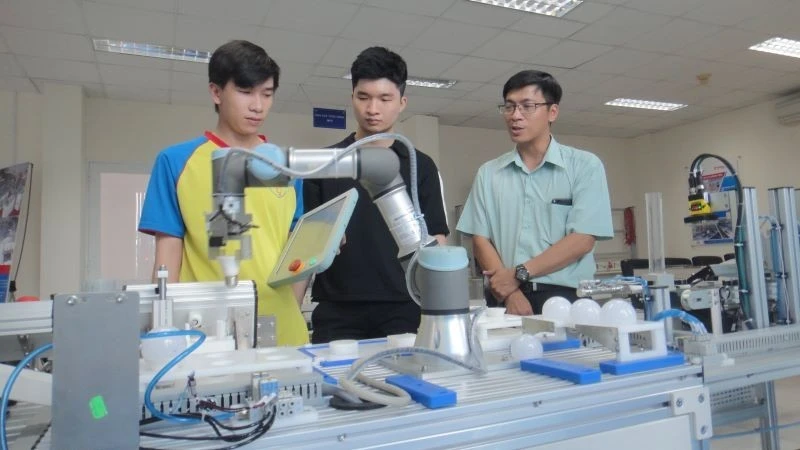
Enhancing Workforce Skills for Sustainable Development
In the face of increasing global competition and rapid technological advancement, Ho Chi Minh City has made human resource training a cornerstone of its economic growth strategy. The city recognizes that boosting productivity and labor quality is not just a necessity but a pivotal factor determining its future success.
Vietnam’s largest economic hub is focusing on aligning workforce development with the practical demands of industries. This strategic shift aims to bridge the gap between academic instruction and real-world employment requirements, ensuring that graduates are job-ready and businesses can access a talent pool equipped to handle modern challenges.
Current Challenges in Human Capital Development
Despite its economic progress, Ho Chi Minh City faces significant hurdles in developing a workforce that meets the evolving needs of the market. Many training programs remain outdated, with curricula that fail to keep pace with technological advancements and industry trends. As a result, businesses often struggle to find skilled workers, and young professionals face difficulties securing employment in their fields of study.
Moreover, there is a notable disconnect between vocational education and the expectations of employers. This mismatch has led to underemployment and inefficiencies in human capital utilization. To address these issues, city leaders are calling for a comprehensive revamp of training systems, with a stronger emphasis on practical skills and industry collaboration.
Strategic Initiatives to Bridge the Gap
Responding to these challenges, Ho Chi Minh City has launched a series of initiatives aimed at transforming its human resources landscape. Authorities are prioritizing vocational and technical training that aligns with market demands. Educational institutions are being encouraged to work closely with businesses to develop training programs that equip students with relevant, hands-on experience.
Public-private partnerships are also being promoted to foster innovation in education and ensure that training content remains up to date. Businesses are playing a more active role in curriculum design, internship programs, and mentorship opportunities, helping to prepare students for immediate integration into the labor market.
Focus on High-Demand Sectors
The city is placing special emphasis on sectors with high growth potential and labor demand, such as information technology, electronics, logistics, finance, and renewable energy. These industries are seen as key drivers of the economy, and their success depends heavily on the availability of skilled professionals.
For instance, the technology sector is rapidly expanding, yet many companies report difficulties in recruiting software engineers and data analysts. To address this, training centers and universities are expanding their IT-related programs and incorporating modern tools and techniques into their teaching methods.
Promoting Lifelong Learning and Digital Transformation
Another critical component of Ho Chi Minh City’s strategy is the promotion of lifelong learning. Recognizing that skills can quickly become obsolete in today’s fast-paced world, the city is encouraging continuous education among workers. This approach not only helps employees stay competitive but also supports businesses in maintaining a dynamic and adaptive workforce.
Digital transformation is being leveraged to facilitate this goal. Online learning platforms, digital resource libraries, and virtual training modules are increasingly accessible, making it easier for individuals to upgrade their skills at their own pace and convenience.
Government Support and Policy Framework
The Vietnamese government is playing a crucial role in supporting these efforts through policy reforms and financial incentives. Investment in education infrastructure, teacher training, and research and development is being ramped up to build a robust foundation for human capital development.
Several national programs have been launched to improve vocational training quality and enhance the linkage between education and the labor market. These initiatives underscore the government’s commitment to ensuring that workforce development is aligned with the country’s broader economic objectives.
Looking Ahead: A Skilled Workforce for a Resilient Economy
As Ho Chi Minh City continues to grow as a regional economic powerhouse, its ability to cultivate a highly skilled and adaptable workforce will be crucial. By aligning training programs with practical needs, fostering collaboration between academia and industry, and embracing digital tools, the city is laying the groundwork for a resilient and inclusive economy.
The journey toward sustainable development is complex, but with a focused approach to human resource training, Ho Chi Minh City is well-positioned to turn its challenges into opportunities and ensure long-term prosperity for its residents.
This article is inspired by content from Original Source. It has been rephrased for originality. Images are credited to the original source.