

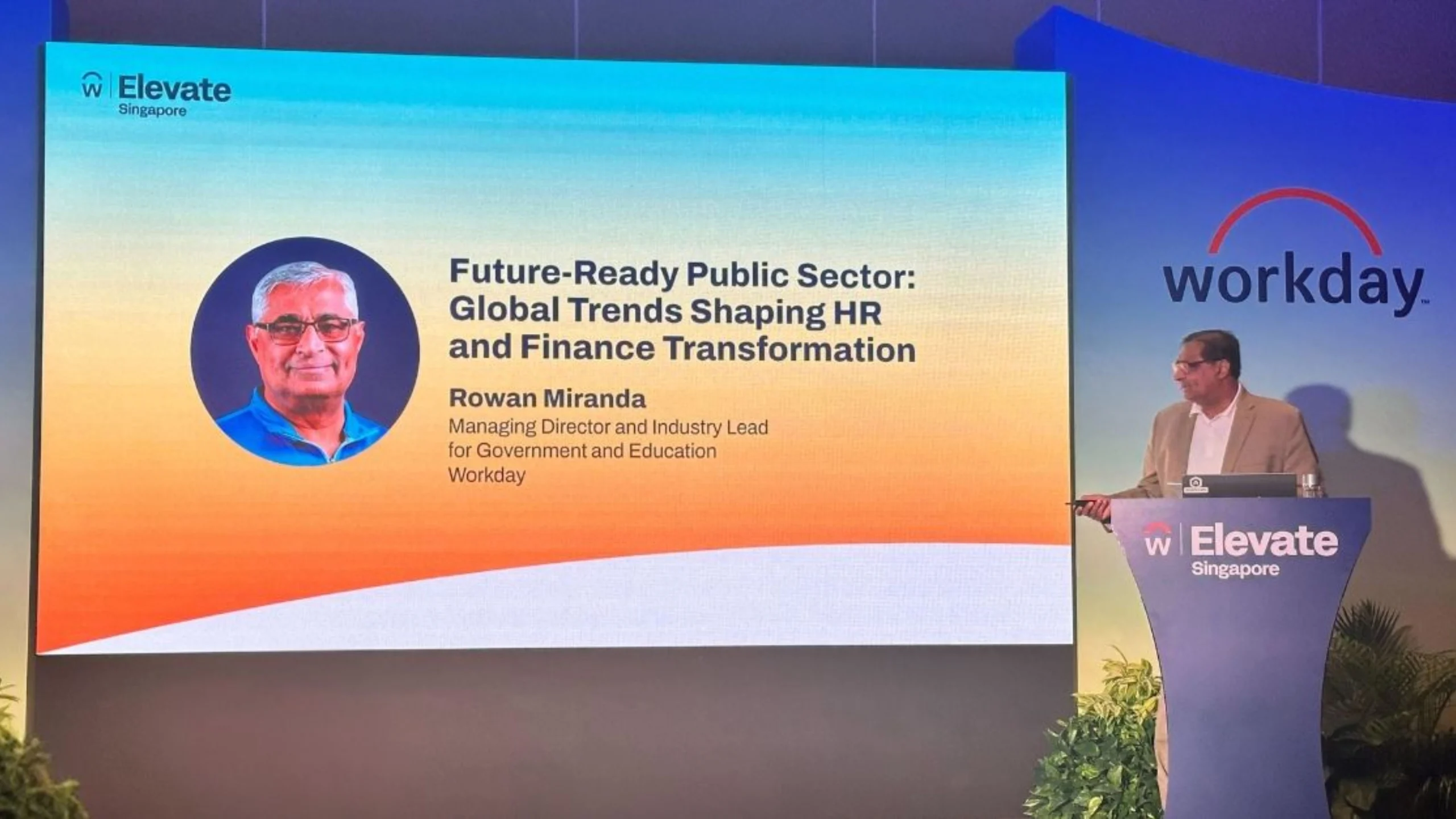
The Workday Elevate event recently showcased the transformative potential of artificial intelligence (AI) in revolutionizing government operations, particularly in human resources (HR) and financial management. With AI’s ability to streamline processes, drive analytics-based decisions, and improve service delivery, the public sector is poised for significant change.
Rowan Miranda, Workday’s Managing Director and Industry Lead for Government and Education, emphasized the importance of simplifying compliance procedures. ‘The way to encourage compliance is to make things easy,’ he stated, highlighting AI’s role in making policy adherence more manageable. AI can ingest complex policy documents and provide users with synthesized answers or frequently asked questions, making it easier for employees to comply with regulations.
In HR, AI agents are set to alleviate the workload of HR managers by automating time-consuming tasks. Imagine asking an AI agent to create a job description for a new hire. Traditionally, this task can take hours of manual effort. However, with AI, the agent can analyze past successful job postings and craft compelling descriptions within minutes. It can even generate multiple versions for testing with hiring managers. Once approved, the AI agent can execute the posting process, shortlist applicants by matching candidates to required skills, and present a curated list of potential interviewees.
Dominic Chia, Workday’s Principal HCM Solution Consultant, illustrated these capabilities during a product showcase at the Workday Elevate event. The session, titled ‘Taking the public sector forever forward in the age of AI,’ explored how public management has evolved globally and how AI can unlock efficiency and effectiveness in government jobs.
Miranda also discussed global public management trends, noting a shift from the ‘new public management’ philosophy to a focus on improving government from within through technology. This includes an emphasis on citizen experience and personalized services, aiming to make government processes more responsive to citizens. Countries like Singapore and Australia have led the way in digital transformation, making processes easier for citizens and increasing voluntary compliance.
Another trend is the adoption of a skills-based talent strategy. Organizations are moving away from degree-based hiring towards skills-based approaches, a shift gaining traction in countries like the UK, Australia, the US, and Singapore. Implementing this approach at scale requires robust human capital management systems with AI as the foundation.
AI is also enhancing analytics-driven decision-making and expanding the use of shared services among governments to improve efficiency. Miranda emphasized that no single country dominates public management innovation, although Singapore, Australia, and New Zealand are at the forefront. Nearly all major advancements in public management rely on advances in information technology, and AI’s impact on government operations is both rapid and inevitable.
Sarah Choe, Workday’s Head of Public Sector, Singapore, praised the Singapore government’s leadership in AI and innovation. She noted the nation’s proactive approach to the future, positioning the Singapore public sector as a leader in technology adoption. Workday’s commitment to public sector transformation is evident in its continuous technology innovation and its expanding global footprint, serving government customers in countries like Australia, Malaysia, the UK, Canada, and the US.
Note: This article is inspired by content from https://govinsider.asia/intl-en/article/ai-agents-set-to-transform-hr-and-financial-operations-for-public-sector. It has been rephrased for originality. Images are credited to the original source.