

Enhancing Human Resources through Strategic Collaboration
In an era marked by rapid technological advancement and evolving labor market requirements, the integration of training and scientific research with market needs has become increasingly essential. Vietnam is proactively pursuing this strategy by adopting a three-party linkage model that connects the state, universities, and businesses to foster a workforce aligned with real-world demands.
This collaborative model aims to unify the goals of education, economic development, and innovation. By aligning academic programs and research initiatives with the practical requirements of the industry, Vietnam seeks to create a sustainable pipeline of skilled professionals who can contribute to the country’s socio-economic growth.
The Three-Party Linkage Model: A Unified Vision
The cornerstone of this strategy is the three-party linkage model, which brings together government policymakers, educational institutions, and private sector enterprises. This model ensures that training programs are not developed in isolation but are informed by industry trends and national development goals.
Government agencies play a critical role by shaping policies that encourage educational reform and provide financial support for scientific research. Universities are tasked with designing curricula and research agendas that reflect these priorities, while businesses contribute by identifying skill gaps and offering practical training opportunities.
According to education experts, this model boosts efficiency and relevance in education. It empowers students with the skills and knowledge required by employers, thereby enhancing job prospects and reducing unemployment rates among graduates.
Fostering Innovation Through Applied Research
Scientific research is another pillar of this integrated approach. By linking research activities with business needs, universities can focus on developing solutions that address real-world problems. This not only contributes to technological innovation but also enhances the global competitiveness of Vietnamese enterprises.
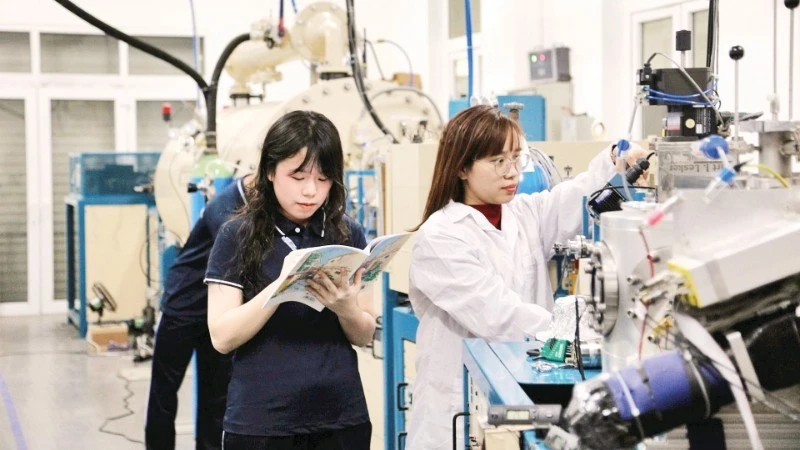
Many universities are now establishing research centers and innovation hubs in collaboration with industry partners. These centers serve as incubators for ideas where students and researchers work together with businesses to develop new products, improve existing technologies, and streamline production processes.
Applied research is gaining prominence as it aligns more closely with market requirements compared to theoretical studies. The government is encouraging this shift by offering grants and incentives for research projects that demonstrate commercial viability or societal impact.
Challenges and Opportunities in Implementation
While the three-party linkage model holds great promise, its implementation is not without challenges. One major hurdle is the mismatch between the pace of academic reform and the rapidly changing needs of the market. Many universities still rely on outdated curricula that do not equip students with the necessary soft skills or technical competencies.
Moreover, collaboration between universities and businesses can be hindered by a lack of mutual understanding and trust. Companies may be reluctant to invest in training programs or research projects due to concerns about intellectual property rights or the return on investment.
To overcome these challenges, experts recommend establishing clear communication channels and legal frameworks that facilitate cooperation. Strengthening public-private partnerships and creating incentives for businesses to engage with academia are also crucial steps.
Building a Future-Ready Workforce
As Vietnam continues to integrate deeper into the global economy, the need for a highly skilled workforce becomes more pressing. The three-party linkage model represents a strategic approach to addressing this need by ensuring that education and research are directly connected to economic and social development goals.
Several pilot programs have already demonstrated the benefits of this model. For example, collaborative projects in the fields of information technology, agriculture, and renewable energy have resulted in significant advancements and job creation. These success stories provide a roadmap for scaling up the model nationwide.
Ultimately, by prioritizing human resource development and fostering a culture of innovation, Vietnam is laying the groundwork for a resilient and dynamic economy. The continued commitment of all stakeholders—government, academia, and industry—will be essential in realizing the full potential of this transformative initiative.
This article is inspired by content from Original Source. It has been rephrased for originality. Images are credited to the original source.