

Focus on Skills Over Degrees for a Future-Ready Workforce
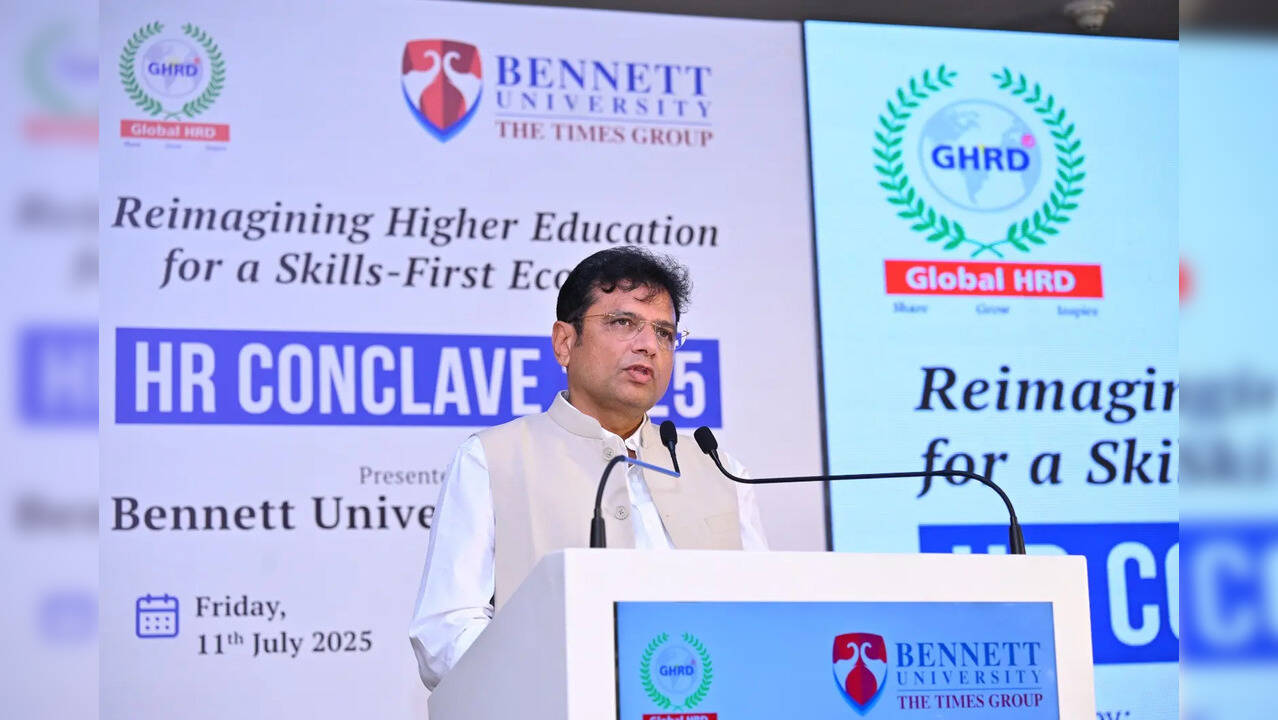
In a compelling address at Bennett University’s HR Conclave, Telangana Minister for Information Technology and Industries, K.T. Rama Rao, emphasized the urgent need to pivot from traditional degree-based education to a skill-centric approach. His speech highlighted the critical transformation required in India’s education system to meet the demands of a rapidly evolving job market.
“Degrees alone are not enough,” the minister said. “We need to create a future-ready workforce that is equipped with practical skills, adaptability, and the ability to innovate.”
The Changing Landscape of Education and Employment
The HR Conclave served as a platform for educators, industry leaders, and policymakers to discuss the shifting dynamics of the workforce. With automation, artificial intelligence, and digital transformation reshaping industries, there is a growing consensus that academic institutions must adapt their curricula to stay relevant.
Minister Rama Rao stressed that India must move beyond rote learning and embrace experiential education. “We must reform the way we teach and learn. The focus should be on developing analytical thinking, problem-solving, and communication skills,” he noted.
Industry-Academia Collaboration a Key Driver
One of the major themes of the conclave was the importance of collaboration between industry and academia. Several panelists highlighted the gap between what is taught in classrooms and the skills required in the workplace. The minister urged educational institutions to work closely with industries to ensure that students are job-ready from day one.
“Academic institutions must become incubators of innovation,” Rama Rao said. “They should collaborate with startups, technology firms, and research organizations to offer students real-world exposure.”
Panel Discussion Sparks Insightful Dialogue
A thought-provoking panel discussion was a key highlight of the event. Experts from diverse fields discussed the future of work, the demand for new-age skills, and the evolving role of human resources in shaping organizational success. The panel underscored the need for agility in both employees and employers.
Speakers unanimously agreed that the traditional notion of a job for life is obsolete. In its place is a new paradigm where lifelong learning and continuous upskilling are essential to career growth.
Government’s Role in Driving Educational Reform
Rama Rao also outlined the Telangana government’s initiatives to reform education and promote skill development. He cited programs aimed at integrating technology into classrooms, upgrading technical institutes, and fostering entrepreneurship among youth.
“We are committed to transforming Telangana into a hub of innovation and talent,” he declared. “Our government is investing in infrastructure, digital tools, and teacher training to ensure students are prepared for the future.”
He also called on the central government and other states to prioritize education reforms and align policies with the needs of the 21st-century economy.
Student and Faculty Reactions
The conclave attracted participation from hundreds of students, faculty members, and HR professionals. Many students expressed enthusiasm about the minister’s vision and the need for a more hands-on learning experience.
Dr. Rajiv Sharma, Dean of Academics at Bennett University, welcomed the minister’s remarks. “We are already working on curriculum enhancements that emphasize skill-building, internships, and industry projects,” he stated.
Students echoed these sentiments, saying they are eager to learn skills that will prepare them for real-world challenges. “It’s encouraging to hear leaders talk about skills over degrees. It gives us confidence in the direction education is heading,” said Sneha Joshi, a second-year engineering student.
Conclusion: A Call to Action
As the conclave concluded, there was a collective sense of urgency and optimism. The message was clear: to remain competitive in the global economy, India must prioritize skill development, foster innovation, and build strong industry-academia linkages.
Minister Rama Rao’s address served as a rallying cry for educational institutions to rethink their approach and for students to embrace a mindset of lifelong learning. With the right policies, partnerships, and passion, the vision of a future-ready workforce is within reach.
This article is inspired by content from Original Source. It has been rephrased for originality. Images are credited to the original source.