

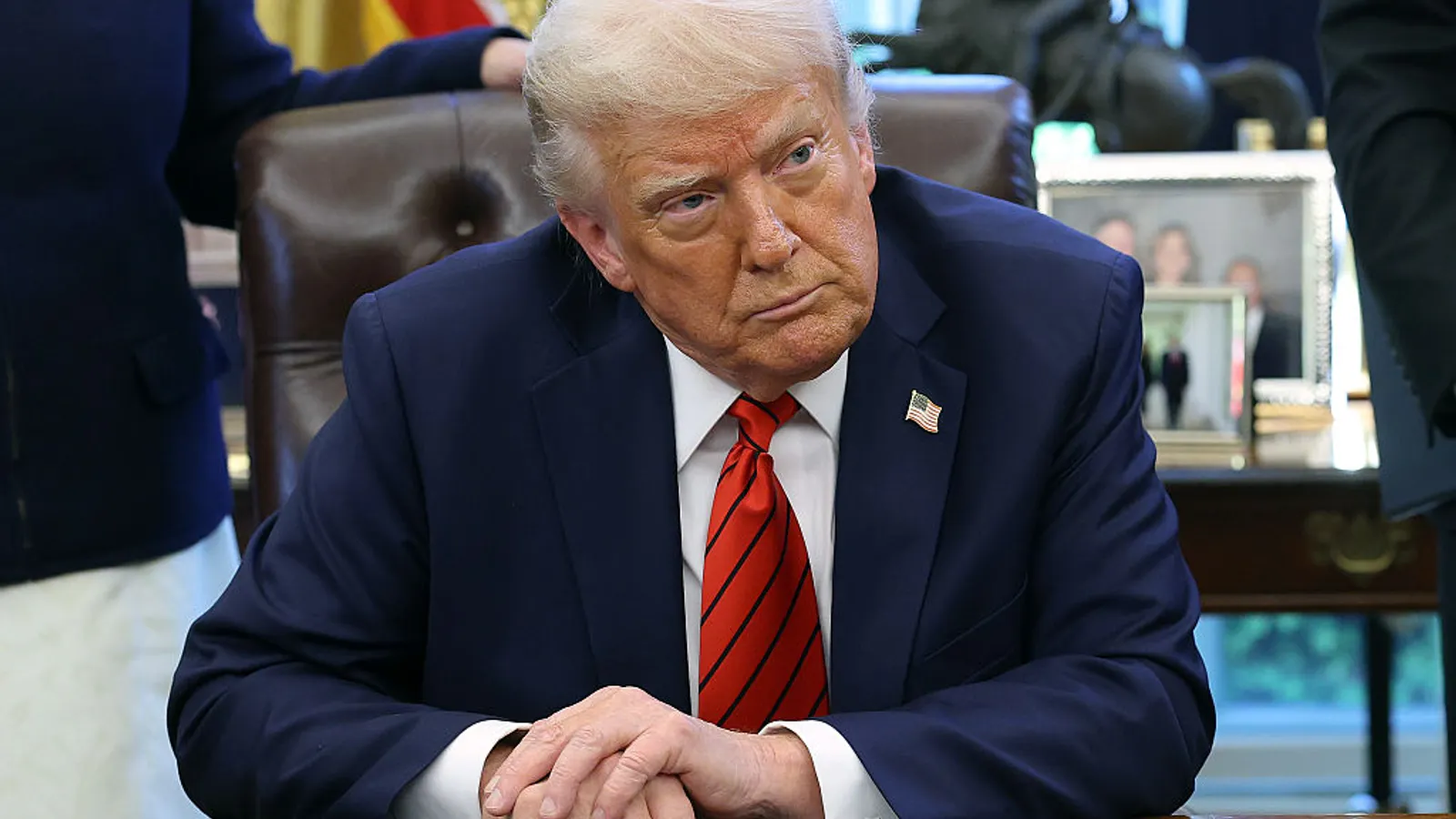
President Donald Trump has stirred controversy with a new executive order that directs federal agencies, including the U.S. Equal Employment Opportunity Commission (EEOC), to cease enforcing disparate-impact liability under civil rights laws. This move, announced on Wednesday, challenges a key component of the amended Civil Rights Act, which has been a cornerstone of anti-discrimination efforts in the United States.
The order claims that disparate-impact liability undermines national values and violates the Constitution by impeding fair hiring decisions. Trump has tasked Attorney General Pam Bondi and Acting EEOC Chair Andrea Lucas with reviewing all ongoing investigations, civil suits, or positions related to federal civil rights laws that rely on this theory. They have 45 days to take appropriate actions concerning these matters.
Additionally, the order mandates Bondi and Lucas to collaborate in developing guidance or technical assistance for employers on promoting equal access to employment, especially where educational attainment may not be a requirement. An EEOC spokesperson has confirmed the agency’s compliance with the order.
The directive represents a significant departure from the longstanding federal enforcement stance taken by the U.S. Department of Justice and EEOC, both of which have historically recognized the legitimacy of disparate-impact claims. According to archival EEOC documentation, Title VII of the 1964 Civil Rights Act prohibits both overt discrimination, known as disparate treatment, and discrimination arising from neutral policies or practices that result in a disproportionate, adverse impact on any protected class. A 1991 amendment to the Civil Rights Act further reinforced the concept of disparate impact and established procedures for plaintiffs to prove such claims.
Disparate-impact liability has been a target for some conservative legal advocates. The Heritage Foundation’s “Project 2025” presidential transition document referenced efforts to eliminate this liability. Although Trump has denied being influenced by the document, he has implemented several of its recommendations and appointed contributors to positions within his administration.
Trump’s order sets a 90-day deadline for all federal agencies to evaluate existing consent judgments and permanent injunctions that rely on disparate-impact liability. Agencies must take appropriate action in line with the order. Furthermore, Bondi has been instructed to determine if any federal authorities preempt state laws, regulations, policies, or practices that impose such liability.
In the order, Trump asserted that disparate-impact liability not only undermines national values but also contradicts the principle of equal protection under the law, thereby violating the Constitution.
The order’s implications have raised concerns among legal experts. Karen Ortiz, an administrative judge at EEOC, expressed in an interview that the order appears to aim at “cutting off” class-action lawsuits alleging discrimination and limiting the concept of discrimination itself. Ortiz noted that disparate treatment is a factor in “almost all” cases handled by the EEOC.
Ortiz described the order as “highly illegal,” expressing skepticism about the commission’s ability to uphold the order given the current leadership and lack of quorum. As the debate unfolds, the order’s impact on civil rights enforcement and employment practices remains uncertain.
Note: This article is inspired by content from https://www.hrdive.com/news/trump-disparate-impact-executive-order-highly-illegal/746388/. It has been rephrased for originality. Images are credited to the original source.