

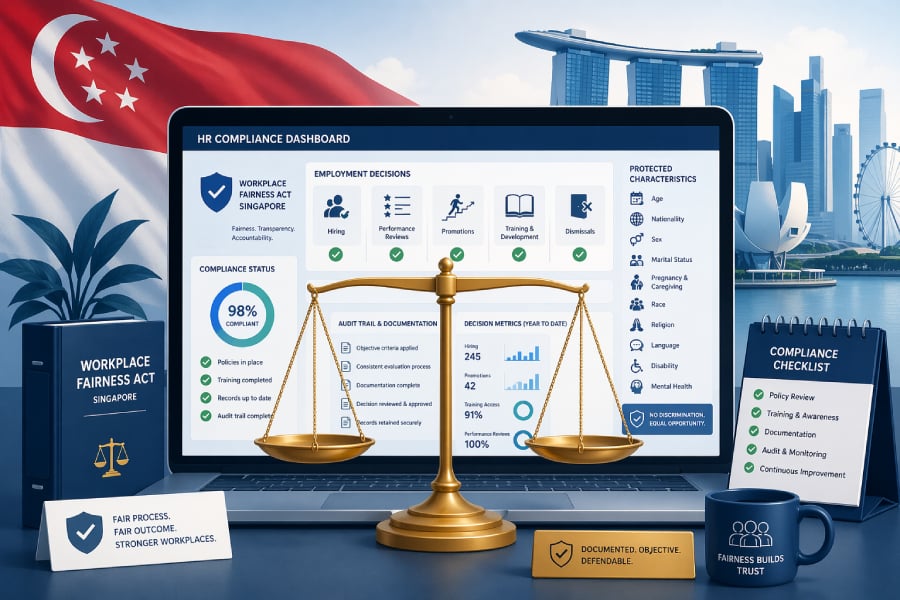
Understanding the Workplace Fairness Act in Singapore
The introduction of the Workplace Fairness Act in Singapore marks a significant shift in the country’s approach to HR compliance. Previously, organizations could rely on policies and guidelines to demonstrate their commitment to fair employment practices. Now, however, the focus has pivoted to tangible proof. This means HR teams must not only develop robust policies but also ensure that every process is documented, auditable, and ready for regulatory scrutiny. The need for efficient HR compliance tools and systems has never been more urgent in Singapore’s evolving legislative landscape.
From Policy to Proof: What HR Needs to Know
The Workplace Fairness Act is designed to enforce fair treatment across all aspects of employment, including recruitment, workplace conduct, and terminations. The Act demands that organizations demonstrate compliance through clear, trackable evidence. This goes beyond having an anti-discrimination policy; it requires a systematic approach to recording decisions, actions, and outcomes related to workplace fairness.
For HR professionals, this means leveraging technologies and processes that can create a digital audit trail. From applicant tracking systems that log recruitment decisions to platforms that manage employee grievances, every action must be recorded and accessible for potential audits. HR compliance is no longer just about intent—it’s about demonstrable action.
Why Documentation and Auditability Are Crucial
One of the core requirements of the Workplace Fairness Act is the ability to present evidence during an investigation or audit. This makes documentation and auditability essential pillars of compliance. If an employee raises a concern, HR must be able to show exactly how the case was handled, what steps were taken, and why certain decisions were made.
Modern HR software now integrates compliance checklists, real-time tracking, and automated reporting to ensure that all activities are not only completed but also logged in a way that is easy to retrieve. This shift to digital record-keeping helps organizations in Singapore proactively manage risk and respond quickly to queries from regulators or employees.
Building a Culture of Compliance Readiness
Adapting to the Workplace Fairness Act requires more than just deploying new software; it calls for a cultural shift within HR teams. Compliance readiness must become an everyday habit. Regular training, process reviews, and mock audits can help ensure that staff understand their responsibilities and that systems are functioning as intended.
Implementing HR compliance practices can also enhance transparency and trust across the organization. When employees see that concerns are handled fairly and consistently, workplace morale and engagement improve. This culture of accountability directly supports the goals of the new legislation.
The Role of Technology in HR Compliance
Cloud-based HR management platforms are at the forefront of supporting compliance with the Workplace Fairness Act. These solutions offer centralized repositories for documents, workflows that ensure procedural consistency, and dashboards that alert HR leaders to areas of potential risk. With automated reminders, robust data encryption, and customizable reporting, HR teams can be confident in their ability to meet regulatory requirements.
Furthermore, technology facilitates real-time monitoring of compliance metrics, helping organizations identify trends and address issues before they escalate. As Singapore continues to tighten its regulatory framework, investing in the right HR tools is a strategic imperative for long-term success.
Conclusion: Preparing for the Future of HR Compliance
The Workplace Fairness Act is transforming how organizations in Singapore approach HR compliance. The demand for rigorous documentation, auditability, and readiness means HR must move decisively from policy to proof. By prioritizing compliance technology, fostering a culture of accountability, and staying informed on legal developments, businesses can not only meet the requirements of the Act but also build a more inclusive and equitable workplace.
This article is inspired by content from Original Source. It has been rephrased for originality. Images are credited to the original source.